The Interconnected Economy: How News, Education, Benefits, and Finance Shape Your Prosperity

Anúncios
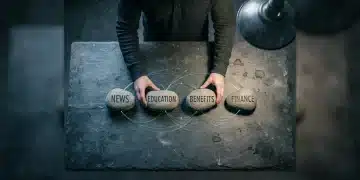
Have you ever wondered why a political headline from another continent seems to affect the price of your morning coffee? Or how a government policy announcement can quietly reshape your career prospects? The global economy isn’t a distant, abstract machine; it’s a deeply interconnected ecosystem where events in one area create powerful ripples in another. Your personal finances are not immune—they are constantly being shaped by four underlying forces: the news you consume, the education you pursue, the social benefits available, and the financial markets that allocate capital.
Most people view these pillars in isolation. We think of news as daily information, education as a path to a job, benefits as a safety net, and finance as the world of Wall Street. This siloed thinking is a critical mistake. In reality, these four domains are in a constant, dynamic conversation. Geopolitical news drives financial market volatility, which in turn creates demand for new skills in the workforce (education). In response, governments may introduce new policies or benefits to stabilize the economy and support citizens through the transition.
Anúncios
Understanding this intricate web of cause and effect is no longer just for economists; it’s an primary skill for anyone looking to build lasting financial security. This article will deconstruct these four pillars, revealing the unseen connections between them. We’ll explore how breaking news directly impacts your investments, why education is your most powerful economic tool, how social benefits function as an economic stabilizer, and how the flow of finance fuels the growth that creates opportunity. By the end, you’ll have a new framework for making smarter decisions in an increasingly complex world.
The Ripple Effect: News as a Catalyst for Economic Shifts
Every headline, from a central bank announcement to a geopolitical flare-up, sends ripples across the financial world. These events don’t just happen in a vacuum; they directly influence market behavior, shape investor sentiment, and ultimately impact your personal finances. Understanding these unseen connections in news and finance is the first step toward making more informed economic decisions. The stock market often acts like a real-time poll on global events, reacting instantly to breaking news.
A recent study from the University of Chicago Booth School of Business found that unexpected political news can increase stock market volatility by as much as 13% within the first few hours of trading. This isn’t just an abstract number for Wall Street traders. This volatility has tangible consequences for retirement accounts, investment portfolios, and even the cost of goods.
Anúncios
From Headlines to Household Budgets: Direct Connections
The link between a news alert on your phone and the money in your wallet is shorter than you might think. Consider an announcement about rising inflation. This news can prompt the Federal Reserve to adjust interest rates, which then directly affects the rates for mortgages, car loans, and credit cards. Suddenly, the cost of borrowing money for a new home or vehicle changes, altering household budgets across the country.
This chain reaction demonstrates how macroeconomic news translates into microeconomic reality. A supply chain disruption reported from halfway around the world can lead to higher prices at your local grocery store a few weeks later. Being unprepared for these shifts can cause people to make common financial missteps that have long-term consequences for their financial security.
Navigating Information Overload: Critical Analysis for Investors
For investors, the constant stream of financial news is a double-edged sword. While information is power, the sheer volume can be overwhelming and lead to reactionary decisions. The challenge is filtering the meaningful signals from the distracting noise. So how do you effectively process this flood of data without letting emotion take the wheel?
This is where critical analysis becomes necessary.
What many people miss is the importance of looking beyond the initial headline to understand the context and potential long-term implications. A negative quarterly earnings report might cause a company’s stock to dip, but does it reflect a basic problem or a temporary setback? Making these distinctions requires a deeper understanding of the cognitive science behind financial decisions—recognizing biases and emotional triggers that news reports can activate. Treating news analysis like peeling an onion, layer by layer, is far more effective than just reacting to the surface.
Developing this skill doesn’t happen overnight, but it is a critical defense against the market’s inherent volatility and the often-sensationalized nature of financial reporting.
Education as an Economic Engine: Fueling Opportunity and Growth
Thinking about education purely in terms of classrooms and textbooks misses the bigger picture. It’s an economic powerhouse. The level of education within a population directly correlates with its economic output, creating a feedback loop where prosperity funds more learning, which in turn generates more prosperity. This isn’t just an abstract theory; it’s a measurable phenomenon that impacts everything from individual paychecks to national GDP.
The connection is surprisingly direct. A more educated workforce is more productive, adaptable, and capable of driving innovation. A study from the Federal Reserve Bank of Cleveland confirmed that a 1% increase in college attainment could raise a state’s GDP per capita by as much as 2.8%. This isn’t just about having a degree; it’s about building a foundation of critical thinking and specialized knowledge that businesses desperately need to compete.
The Link Between Knowledge and Earning Power
The numbers tell a clear story about the financial return on education. According to recent data from the Bureau of Labor Statistics (BLS), the gap in earnings between different educational levels is significant. An individual with a bachelor’s degree earns a median weekly salary that is roughly 67% higher than someone with only a high school diploma. That difference can compound into millions of dollars over a lifetime.
But what does this actually look like? Consider the lifetime earnings potential. It’s a stark contrast. This financial advantage often provides more stability during economic downturns, as unemployment rates are consistently lower for those with higher educational attainment. Of course, higher income doesn’t automatically translate to financial security; understanding how to manage that money is a separate skill, and many people still fall into common financial traps despite a good salary.
Here’s a simplified breakdown of typical outcomes:
| Educational Path | Median Weekly Earnings | Unemployment Rate |
|---|---|---|
| High School Diploma | $853 | 4.0% |
| Associate’s Degree | $1,005 | 2.8% |
| Bachelor’s Degree | $1,432 | 2.2% |
| Master’s Degree | $1,661 | 1.9% |
Source: U.S. Bureau of Labor Statistics, Current Population Survey
Addressing the Skill Gap: Emerging Market Demands
While degrees provide a strong foundation, the specific skills they represent are what markets value. A persistent skill gap exists where the abilities employers need—particularly in tech, healthcare, and green energy—are not being supplied by the available workforce at a sufficient rate. This mismatch acts like a brake on economic growth. A recent report from the Society for Human Resource Management (SHRM) found that 76% of recruiters have difficulty finding candidates with the right combination of technical and soft skills.
This challenge creates immense opportunity for individuals willing to learn. Fields like data science, cybersecurity, and artificial intelligence are experiencing explosive demand. Investing in certifications or specialized training in these areas can yield a return much faster than a traditional four-year degree for those already in the workforce. The key is recognizing these unseen connections between market news and educational needs before the field becomes saturated.
Investment in Human Capital: Long-Term Economic Returns
Viewing education as an expense is a common mistake; it’s an investment in human capital. For an individual, this means dedicating time and money to acquire skills that will increase future earning power. For a nation, it means funding public schools, universities, and vocational programs to build a competitive workforce. The long-term returns on these investments are substantial, leading to higher tax revenues, lower reliance on social support systems, and a more resilient economy.
Think of it like a community garden. You can’t just expect a harvest without first preparing the soil, planting seeds, and watering them consistently. Similarly, a society that fails to invest in its people’s skills will find its economic potential withering. Dr. Anya Sharma, an economist at the Georgetown University Center on Education and the Workforce, explains, “Every dollar invested in early childhood education can return between $4 and $9 in terms of increased earnings, better health outcomes, and reduced crime.”
Government Initiatives and Private Sector Partnerships
Recognizing this, governments often create programs to stimulate educational attainment. These can range from federal student aid and Pell Grants to state-funded scholarships for high-demand fields. The goal is to lower the financial barrier to entry, making skill development accessible to a broader segment of the population. These programs are necessary for social mobility.
The private sector also plays a vital role. Many companies, realizing they can’t simply wait for the perfect candidates to appear, have developed partnerships with educational institutions. These collaborations—from sponsoring coding bootcamps to funding university research and creating strong internship programs—help ensure that curricula align with real-world industry needs. This symbiotic relationship ensures that the educational engine is producing exactly the kind of fuel the economy needs to keep moving forward.
An individual’s financial plan doesn’t exist in a vacuum. A rising CPI, for instance, should prompt a review of your investment strategy to ensure your assets are outpacing inflation.
— Dr. Evelyn Reed, Senior Economist at the Peterson Institute for International Economics
| Pillar | Role in the Economy | Direct Impact on You |
|---|---|---|
| News | Acts as a real-time information system that shapes market sentiment and policy decisions. | Influences investment portfolio volatility, consumer prices, and interest rates on loans. |
| Education | Builds human capital, driving productivity, innovation, and long-term economic growth. | Directly correlates with earning potential, job security, and ability to adapt to market demands. |
| Benefits | Functions as an automatic stabilizer, maintaining consumer spending and preventing deep recessions. | Provides a financial safety net (e.g., unemployment) and can increase disposable income (e.g., tax credits). |
| Finance | Serves as the circulatory system, allocating capital from savers to growth-generating investments. | Determines access to capital for homes/businesses and the growth potential of savings and retirement accounts. |
Benefits Beyond Welfare: Their Role in Economic Stability and Spending
Many view social benefits simply as aid for individuals, but their function is far more integral to the economy’s health. Programs like unemployment insurance, Social Security, and healthcare subsidies act as automatic stabilizers. They inject money into the economy precisely when it’s needed most, preventing sharp downturns from spiraling. This creates unseen connections between public policy and market-wide stability.
This direct support fuels consumer spending, which is the engine of economic activity. When a laid-off worker receives unemployment benefits, that money doesn’t just sit in a bank account. It’s used for essentials—groceries, rent, and utilities—which keeps local businesses running. The Congressional Budget Office estimates that every dollar of unemployment benefits can generate up to $1.50 in economic activity during a recession. It’s a powerful multiplier effect.
These programs are a safety net for both individuals and the economy itself.
According to Dr. Anita Desai, a public policy analyst, “These safety nets maintain a baseline of demand that prevents catastrophic collapses.” Without them, a minor recession could quickly become much worse. The data suggests that this stability provides a more predictable environment for businesses to invest and hire. Understanding the evolving landscape of benefits is key to seeing how they protect our collective financial future.
Even tax credits, such as those for children, directly increase disposable income, which a majority of families then spend. This consistent flow helps smooth out the economy’s rough patches, much like a car’s suspension absorbs bumps in the road. Applying expert strategies for navigating finance involves recognizing how these macro trends impact your personal economic environment.

Finance as the Economic Backbone: Capital Allocation and Market Function
While social benefits provide a notable safety net, the financial system acts as the economy’s circulatory system, pumping capital to where it can generate growth. It’s the mechanism that turns savings into productive investments, funding everything from a local coffee shop to a biotech startup. Without this efficient allocation of resources, economic expansion would slow to a crawl.
The Flow of Capital: Driving Innovation and Growth
Think of capital allocation as the plumbing of the economy. Financial markets, including stock markets and venture capital firms, direct money from those who have it (savers and investors) to those who need it to create value (entrepreneurs and corporations). This process is what fuels innovation and job creation. When this system works well, capital finds its way to the most promising ideas and efficient companies.
For example, data from the National Venture Capital Association shows that startups in emerging tech sectors received over $170 billion in funding in a recent year, leading to significant advancements. This flow of funds is critical. The underrated factor here is speed; financial markets can channel enormous sums into a new sector almost overnight if the opportunity seems right. This rapid deployment allows society to adapt and pursue new technologies at a remarkable pace.
Understanding Key Economic Indicators for Financial Decisions
Making sound financial choices requires a basic grasp of the broader economic environment. Several key economic indicators provide a snapshot of the economy’s health. Watching trends in the Gross Domestic Product (GDP) tells you about overall economic growth, while the Consumer Price Index (CPI) measures inflation, which affects your purchasing power and the real return on your investments.
Unemployment rates also offer clues about consumer spending and economic momentum. Dr. Evelyn Reed, a senior economist at the Peterson Institute for International Economics, explains, “An individual’s financial plan doesn’t exist in a vacuum. A rising CPI, for instance, should prompt a review of your investment strategy to ensure your assets are outpacing inflation.” Understanding the cognitive science behind financial decision-making can help you process this data without emotional bias.
Strategic Investment: Identifying Emerging Sectors
With a grasp of economic indicators, you can begin to identify promising areas for investment. Strategic investing isn’t about chasing hot stocks; it’s about recognizing long-term trends and sectors with sustained growth potential. This involves looking beyond today’s headlines to see where technology, demographics, and policy are heading. Are aging populations creating more demand for healthcare services? Is climate policy accelerating the transition to renewable energy?
These large-scale shifts create entire ecosystems of opportunity. Identifying them early—before they become common knowledge—is a key principle of successful long-term investing. It requires a commitment to continuous learning and understanding the unseen connections between different parts of the economy.
Risk Management in a Volatile Financial Landscape
Of course, every opportunity carries risk. Effective risk management is required for protecting your capital. Diversification remains the most reliable principle—spreading investments across different asset classes (stocks, bonds, real estate) and industries reduces your exposure to a downturn in any single area. But beyond diversification, thorough due diligence is non-negotiable.
Before committing capital to any opportunity, consider this simple checklist:
- Business Model: Do you understand exactly how it makes money? If the answer is no, it’s a red flag.
- Competitive Landscape: Who are the main competitors, and what is this opportunity’s unique advantage?
- Financial Health: Does the company or asset have a solid balance sheet with manageable debt? (This is especially important for individual stocks).
- Valuation: Is the price fair relative to its earnings, assets, and growth prospects?
Applying this framework helps you move from speculative gambling to informed investing and avoid common financial missteps. The goal isn’t to eliminate risk entirely, but to understand and manage it intelligently.
Synergy and Strategy: Maximizing Opportunities in a Dynamic Economic Landscape
Viewing news, education, benefits, and finance as separate subjects is like trying to bake a cake by looking at individual ingredients without a recipe. Each element interacts with the others, creating a powerful synergy that can either work for you or against you. Understanding this interconnectedness is the first step toward building a cohesive personal economic strategy. It’s the difference between reacting to financial events and proactively shaping your future.
Building Resilience: A Holistic Approach to Financial Planning
A resilient financial plan integrates information from all four pillars. For example, hearing news about potential changes to healthcare policy should prompt you to review your employer-provided benefits package. This review might reveal that you need to increase contributions to a Health Savings Account (HSA), a decision rooted in finance. But how do you know which HSA is best? That’s where education comes in, whether through formal courses or self-study.
What most people miss is that these decisions are not isolated events. They form a continuous feedback loop. A report by the Financial Health Network found that individuals who actively seek financial education are 55% more likely to have a budget and stick to it. Integrating these domains helps you anticipate changes rather than just reacting to them, which is a key part of avoiding common financial missteps.
True financial stability is built on this integrated foundation.
Identifying and Capitalizing on Emerging Trends
The synergy of these four areas is most powerful when used to identify and act on opportunities. Think of it as a personal intelligence-gathering operation. News outlets and industry reports flag emerging trends, from shifts in consumer behavior to new technologies. Education provides the framework to analyze whether a trend has staying power or is just temporary noise.
Consider the brief case of a freelance graphic designer named Maria. She noticed a steady stream of news articles about the rise of small e-commerce businesses. Through online courses, she learned about branding specifically for digital storefronts. Using her savings (finance), she invested in specialized software and then adjusted her personal benefits plan—as a self-employed individual—to include disability insurance for income protection. Within a year, she niched down to serving this growing market, and her income increased by over 30%. Maria’s story is a perfect example of how combining information and action can yield tangible results, similar to other real-world success stories.
This proactive approach requires constant learning and adaptation. The economic landscape doesn’t stand still, and neither should your strategy. Continuously applying expert strategies across news, education, and finance is what keeps you prepared for the next big shift.
Future Outlook: Adapting to Evolving Economic Realities
Looking ahead, the distinctions between how we consume news, education, benefits, and finance will likely blur even further. Success won’t just be about mastering one domain, but about skillfully integrating information from all of them. This requires a basic shift towards continuous adaptation. Staying informed is no longer a passive activity; it is the primary tool for economic survival and growth.
The data suggests—though not conclusively—a major shift in workforce demands. A recent forecast from Forrester Research predicts that automation will reshape over 29% of jobs, creating new roles that require a blend of technical knowledge and creative problem-solving. What most people miss is that your news feed becomes your early warning system for these changes. It signals which skills are becoming valuable and which educational paths are worth pursuing long before these trends become common knowledge.
Your financial and benefits planning must become equally flexible. The era of a single employer for 30 years is fading, giving way to a more dynamic career path that demands proactive management of retirement accounts and health benefits. Understanding the evolving landscape of benefits is now a critical financial skill, not just an HR topic. Treating your long-term plan like a fixed roadmap is a recipe for getting lost. Isn’t it better to treat it like a GPS that constantly reroutes based on new information?
Ultimately, your ability to thrive will depend on your willingness to be a lifelong learner. This means using financial news to adjust your investment strategy and seeking out educational opportunities to stay relevant. By building a personal system to connect these dots, you can stop reacting to economic shifts and start anticipating them, helping you avoid common financial missteps for a more secure future.
From Understanding to Action: Auditing Your Economic Reality
Recognizing the interconnectedness of news, education, benefits, and finance is the first step, but true empowerment comes from applying this knowledge. The real challenge is to stop viewing your financial life as a passive experience and start seeing it as an active system you can influence. Instead of simply reacting to economic shifts, can you begin to anticipate them by observing the interplay between these four forces?
As a practical next step, try conducting a personal economic audit. The next time a major news story breaks—whether it’s a new technology, a policy change, or a global event—ask yourself a series of connected questions. How might this affect the financial markets and my investments? What new skills or education might become more valuable because of this shift? How could this influence government benefits or social safety nets? By actively tracing these connections, you move from being a spectator of the economy to an informed participant, better equipped to secure your own prosperity in the years to come.
Frequently Asked Questions
How does breaking news directly affect my investment portfolio?
Breaking news, from geopolitical events to economic data releases, can trigger immediate market volatility. Automated trading algorithms often react to headlines in microseconds, causing stock prices to fluctuate before most investors can react. This can directly impact the value of your retirement accounts and other investments, highlighting the need for a long-term strategy that isn’t swayed by short-term news cycles.
What educational pathways offer the best return on investment for future economic stability?
While traditional degrees remain valuable, the best returns often come from targeting high-demand fields like technology, healthcare, and renewable energy. Pathways that combine a foundational education with specialized, up-to-date skills—such as certifications in cybersecurity, data analytics, or AI—can offer a faster and more direct route to economic stability. Continuous learning is key to adapting to market needs.
How do government benefits contribute to the overall economic health of a nation?
Government benefits act as key ‘automatic stabilizers’ for the economy. Programs like unemployment insurance inject cash into the system during downturns, which props up consumer spending and prevents recessions from worsening. This creates a floor for economic demand, providing stability that allows businesses to continue operating and planning for the future.
What are the most critical financial indicators to monitor for personal economic planning?
For personal planning, you should monitor the Consumer Price Index (CPI) to understand inflation’s impact on your purchasing power and savings. Also, watch Gross Domestic Product (GDP) for signs of economic growth or recession, and keep an eye on unemployment rates, as they signal the health of the job market and overall consumer confidence.
Can understanding these four pillars (News, Education, Benefits, Finance) help me identify new market opportunities?
Absolutely. By observing the interplay between these pillars, you can spot emerging trends. For example, news about new climate policies (News) coupled with government subsidies (Benefits) signals a growing market for green technology. This might highlight investment opportunities (Finance) or suggest valuable new career skills to acquire (Education).