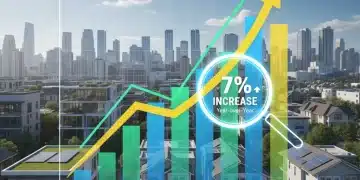
2026 Economic Outlook: Global Growth & US Households
Anúncios
2026 Economic Outlook: Analysts Predict a 3% GDP Growth Amidst Shifting Global Markets – What It Means for U.S. Households
Anúncios
As we navigate the complexities of the current global financial landscape, eyes are already turning towards the 2026 Economic Outlook. Analysts worldwide are coalescing around a projected 3% GDP growth, a figure that, while seemingly modest, carries significant implications for economies across the globe and, more specifically, for U.S. households. This forecast isn’t just a number; it’s a tapestry woven with threads of geopolitical shifts, technological advancements, evolving consumer behaviors, and sophisticated monetary policies. Understanding this outlook is crucial for individuals and families planning their financial futures, making investment decisions, and simply budgeting for everyday life.
The anticipation of a 3% global GDP growth in 2026 suggests a period of continued, albeit perhaps cautious, expansion. This growth is expected to be uneven, with certain regions and sectors outperforming others. Emerging markets, driven by demographic shifts and industrialization, might contribute disproportionately to this growth, while established economies grapple with different sets of challenges, including aging populations and productivity puzzles. For the United States, this global context directly influences trade balances, currency valuations, and the flow of capital, all of which ultimately filter down to impact the average American household.
Anúncios
Understanding the 2026 Economic Outlook: Key Drivers of Growth
The projected 3% GDP growth for the 2026 Economic Outlook is underpinned by several key drivers. Firstly, continued technological innovation, particularly in areas like artificial intelligence, biotechnology, and renewable energy, is expected to boost productivity and create new industries. These advancements can lead to job creation, increased efficiency, and a higher standard of living, though they also present challenges related to workforce adaptation and equitable distribution of benefits.
Secondly, demographic shifts play a crucial role. While some developed nations face an aging workforce, other regions, particularly in Asia and Africa, boast young and expanding populations that can fuel consumption and production. The global interconnectedness means that these demographic trends in one part of the world can create demand for goods and services produced elsewhere, including the U.S.
Thirdly, government policies and international cooperation will be instrumental. Fiscal policies aimed at infrastructure development, education, and research and development can stimulate economic activity. Similarly, efforts to reduce trade barriers and foster international collaboration on global challenges like climate change and pandemics can create a more stable and prosperous environment for economic growth. However, protectionist tendencies or geopolitical tensions could introduce headwinds, making the 2026 Economic Outlook somewhat sensitive to policy decisions made today.
Finally, the resilience and adaptability of global supply chains, tested severely in recent years, will be a significant factor. Investments in diversifying supply sources, reshoring critical production, and improving logistical networks can mitigate future disruptions and ensure a smoother flow of goods and services, supporting consistent economic activity.
The U.S. Economy in the 2026 Economic Outlook: A Closer Look
For U.S. households, the 2026 Economic Outlook is a complex picture of opportunities and challenges. While the global 3% GDP growth provides a favorable backdrop, domestic factors will largely dictate the direct impact on American families. The U.S. economy is expected to continue its path of recovery and expansion, albeit potentially at a more moderate pace than the immediate post-pandemic boom. Key areas to watch include inflation, interest rates, labor markets, and consumer spending.
Inflationary Pressures and Purchasing Power
One of the most pressing concerns for U.S. households in the lead-up to and during 2026 will be inflation. While central banks have been actively working to bring inflation down to target levels, residual pressures from supply chain issues, energy costs, and wage growth could persist. A 3% global GDP growth could, in some scenarios, exert upward pressure on commodity prices, further influencing domestic inflation. For U.S. households, sustained inflation erodes purchasing power, making everyday goods and services more expensive and diminishing the real value of savings and fixed incomes.
Understanding the trajectory of inflation is paramount. If inflation remains elevated, households will need to adjust their budgeting and spending habits. This could mean prioritizing essential expenditures, seeking out value, and potentially delaying larger purchases. Conversely, if inflation moderates as expected, it could provide some relief, allowing wages to catch up and savings to retain more of their value. The Federal Reserve’s monetary policy decisions, particularly regarding interest rates, will be a critical determinant of this outcome, directly influencing borrowing costs for everything from mortgages to credit card debt.

Labor Market Dynamics and Wage Growth
The labor market is another vital component of the 2026 Economic Outlook for U.S. households. A robust labor market, characterized by low unemployment and strong wage growth, provides financial stability and encourages consumer spending. The projected global growth suggests continued demand for skilled labor, and the U.S. is likely to see ongoing job creation, particularly in high-tech, healthcare, and green energy sectors.
However, the nature of work is continuously evolving. Automation and AI could displace certain types of jobs, necessitating workforce retraining and adaptation. Wage growth, while desirable, needs to be balanced against inflation. Real wage growth (wages adjusted for inflation) is what truly improves household living standards. If nominal wages rise but inflation rises faster, households will feel a squeeze. Policies supporting education, vocational training, and flexible work arrangements will be crucial in ensuring that the benefits of economic growth are widely distributed across the workforce.
Interest Rates and Debt Management
Interest rates are a direct consequence of central bank policies aimed at managing inflation and stimulating growth. In the context of the 2026 Economic Outlook, the trajectory of interest rates will significantly impact U.S. households. Higher interest rates increase the cost of borrowing for mortgages, car loans, and credit card debt, potentially dampening consumer spending and investment. For homeowners with variable-rate mortgages or those looking to refinance, interest rate movements will be a key financial consideration.
Conversely, higher interest rates can be beneficial for savers, offering better returns on savings accounts, certificates of deposit (CDs), and bonds. Households will need to strategically manage their debt, potentially prioritizing paying down high-interest loans, and explore options for maximizing returns on their savings. Financial planning in this environment will require a careful balance between managing liabilities and optimizing assets, taking into account the prevailing interest rate environment.
Investment Strategies for U.S. Households in 2026
Given the anticipated 2026 Economic Outlook, U.S. households should review and potentially adjust their investment strategies. The projected 3% global GDP growth, coupled with shifting market dynamics, presents both opportunities and risks. Diversification, long-term perspective, and informed decision-making will be more important than ever.
Equities and Sectoral Opportunities
Equity markets typically react to economic growth forecasts. A 3% global GDP growth could support corporate earnings, potentially leading to positive stock market performance. However, investors should be discerning. Certain sectors are likely to outperform others. Technology, given its continuous innovation, remains a strong contender. Renewable energy, driven by global climate goals and increasing demand, is another sector with significant growth potential. Healthcare, resilient due to demographic trends and ongoing innovation, also presents stable opportunities.
U.S. households should consider diversifying their equity portfolios across different sectors and geographies. While domestic stocks offer familiarity, exposure to international markets, especially those in emerging economies poised for higher growth, could enhance returns. Investing in exchange-traded funds (ETFs) or mutual funds that offer broad market exposure or target specific growth sectors can be a practical approach for many investors.
Fixed Income and Diversification
With interest rates expected to normalize or even remain slightly elevated, fixed-income investments become more attractive. Bonds, both government and corporate, can offer a relatively stable income stream and serve as a hedge against equity market volatility. For U.S. households, a balanced portfolio that includes a mix of equities and fixed income is often recommended to manage risk and achieve long-term financial goals.
Diversification within fixed income is also important. Different types of bonds (e.g., Treasury bonds, municipal bonds, corporate bonds) carry varying levels of risk and return. Understanding the credit quality and duration of bonds is crucial, especially in an environment where interest rates might fluctuate. Short-duration bonds, for instance, are less sensitive to interest rate changes than long-duration bonds.

Real Estate Market Considerations
The real estate market is another key area for U.S. households. The 2026 Economic Outlook will influence housing demand, property values, and mortgage rates. If economic growth remains steady and job markets strong, housing demand could continue to be robust. However, higher interest rates could temper affordability, potentially moderating price appreciation in some regions.
For homeowners, understanding local market conditions is vital. For prospective buyers, carefully assessing affordability and locking in favorable mortgage rates will be critical. Real estate can be a significant component of household wealth, and its performance will be closely tied to the broader economic environment.
Global Market Shifts and Their Ripple Effects on U.S. Households
The 2026 Economic Outlook is inherently global, meaning that shifts in international markets will inevitably create ripple effects for U.S. households. Geopolitical developments, trade policies, and the economic performance of major trading partners all play a role.
Geopolitical Landscape and Trade Relations
The geopolitical landscape in 2026 could be characterized by ongoing tensions and evolving alliances. Conflicts, trade disputes, and shifts in international relations can disrupt supply chains, increase commodity prices, and create uncertainty in financial markets. For U.S. households, this can translate into higher prices for imported goods, reduced availability of certain products, and volatility in investment portfolios. Businesses that rely heavily on international trade might face challenges, potentially impacting employment and wages.
Conversely, diplomatic resolutions and strengthened international cooperation could foster a more stable environment, benefiting global trade and economic growth. The U.S. government’s trade policies, including tariffs and trade agreements, will directly influence the cost and availability of goods for American consumers and the competitiveness of U.S. industries.
Emerging Markets and Global Demand
The growth trajectory of emerging markets will be a significant factor in the 2026 Economic Outlook. As these economies expand, they create increased demand for goods and services, including those produced in the United States. This can boost U.S. exports, support domestic industries, and create jobs. However, volatility in emerging markets can also transmit financial shocks globally, potentially affecting U.S. investment portfolios and economic stability.
U.S. households invested in globally diversified funds or companies with significant international exposure will feel these effects more directly. Understanding the economic health and political stability of key emerging markets will be an important aspect of investment due diligence.
Preparing U.S. Households for the 2026 Economic Outlook
Proactive financial planning is essential for U.S. households to navigate the 2026 Economic Outlook successfully. This involves a multi-faceted approach that considers budgeting, saving, debt management, and investment strategies.
Budgeting and Emergency Savings
In an environment of potential economic shifts, maintaining a robust budget is critical. Households should meticulously track their income and expenses to identify areas for savings and ensure financial resilience. Building and maintaining an emergency fund, ideally covering three to six months of living expenses, provides a crucial safety net against unexpected job loss, health issues, or other financial shocks.
The ability to adapt spending habits in response to inflation or changes in income will be a key determinant of financial well-being. Regular review of the budget, perhaps quarterly, allows households to adjust to evolving economic conditions and ensure they remain on track towards their financial goals.
Debt Management and Credit Health
Managing debt effectively is paramount, especially if interest rates remain elevated. Prioritizing high-interest debt, such as credit card balances, can free up significant funds. Exploring options for debt consolidation or refinancing lower-interest loans may also be beneficial, depending on individual circumstances and prevailing interest rates. Maintaining a strong credit score is also important, as it grants access to better interest rates for future borrowing needs, such as a mortgage or car loan.
The 2026 Economic Outlook emphasizes the importance of financial discipline. Avoiding unnecessary debt and living within one’s means will provide greater financial flexibility and reduce vulnerability to economic downturns.
Education and Skill Development
As the labor market evolves, continuous learning and skill development will be crucial for maintaining employability and increasing earning potential. U.S. households should encourage investments in education, vocational training, and upskilling programs for all family members. This adaptability ensures that individuals can pivot to in-demand roles and capitalize on new opportunities arising from technological advancements and economic growth.
Government initiatives and employer-sponsored training programs can be valuable resources in this regard. A skilled workforce is a resilient workforce, better equipped to weather economic changes and contribute to the overall prosperity envisioned in the 2026 Economic Outlook.
Conclusion: Navigating the Future with Confidence
The 2026 Economic Outlook, with its forecast of 3% global GDP growth and dynamic market shifts, presents a complex yet navigable future for U.S. households. While challenges such as persistent inflation, evolving labor markets, and geopolitical uncertainties will undoubtedly arise, opportunities for growth, investment, and improved living standards also abound. By understanding the key drivers of economic change, adopting proactive financial planning strategies, and maintaining a diversified approach to investments, American families can position themselves for success.
The journey through 2026 and beyond will require vigilance, adaptability, and informed decision-making. Staying abreast of economic news, consulting with financial advisors, and continuously evaluating personal financial health will empower households to not only withstand potential headwinds but also to harness the tailwinds of global economic expansion. The future is not just about reacting to economic forecasts but actively shaping one’s financial destiny within the broader economic landscape.