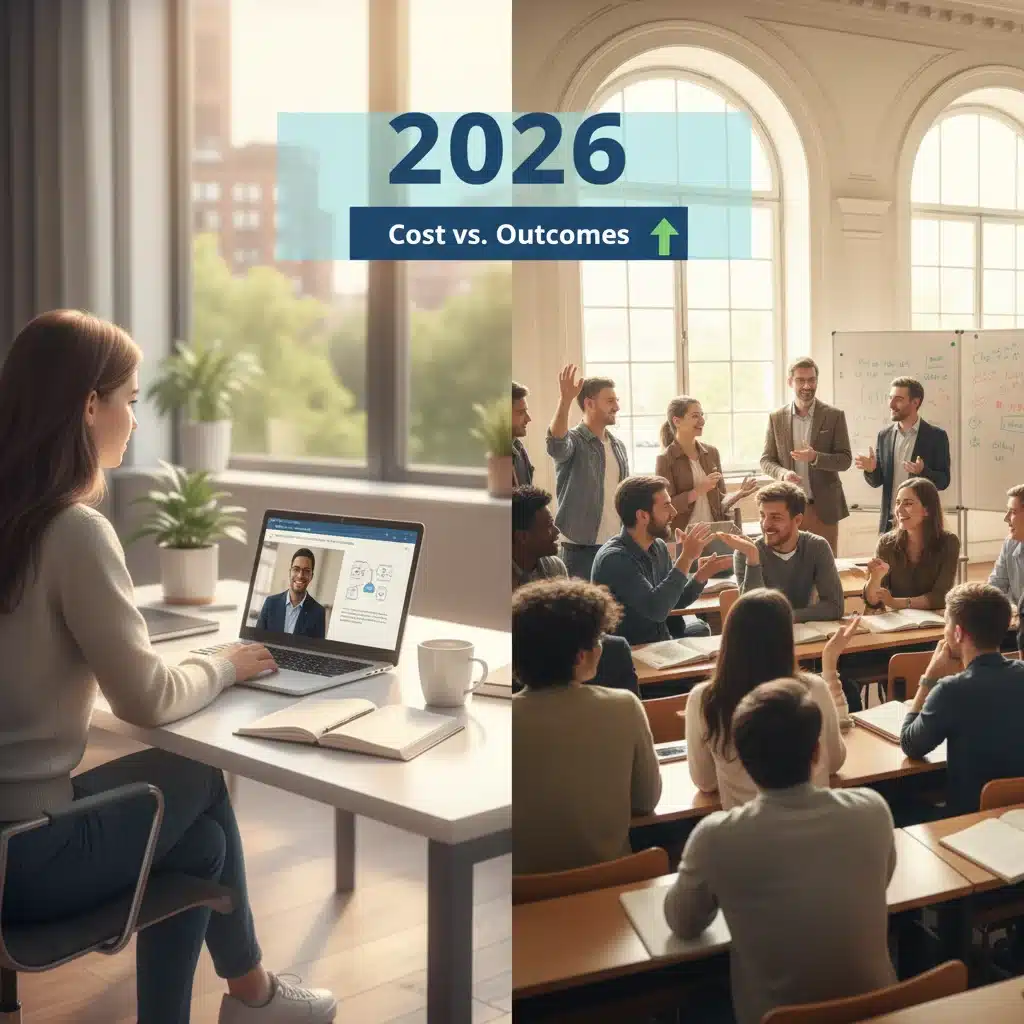
Online vs. In-Person Degrees in 2026: A Data-Backed Analysis of Cost and Career Outcomes
The landscape of higher education is constantly evolving, and as we look ahead to 2026, the debate between pursuing an online vs in-person degree is more relevant than ever. Students today face a myriad of choices, each promising unique advantages and potential drawbacks. The decision is no longer a simple one, driven solely by proximity to a campus or the availability of a specific program. Instead, it’s a complex equation involving financial investment, career aspirations, personal learning styles, and lifestyle preferences. This comprehensive guide aims to dissect the intricacies of both educational pathways, providing a data-backed analysis to help prospective students make an informed decision for their future.
Anúncios
The rise of digital learning technologies has transformed education, making it accessible to millions who might otherwise be excluded from traditional academic settings. However, the enduring value of the on-campus experience, with its rich social interactions and immersive environment, continues to hold significant appeal. As we delve into 2026, understanding the current trends, statistical insights, and expert projections regarding the cost, career outcomes, and overall value of an online vs in-person degree is paramount. This article will explore these critical dimensions, offering a balanced perspective to assist you in navigating this pivotal choice.
The Evolving Educational Landscape: Why the Choice Matters More Than Ever
The global pandemic accelerated the adoption of online learning, pushing institutions to innovate and refine their digital offerings at an unprecedented pace. What was once considered a niche alternative is now a mainstream option, often indistinguishable in quality from its traditional counterpart. However, the return to normalcy has also rekindled the appreciation for physical campuses, highlighting the unique benefits of face-to-face interaction. For students considering their options in 2026, this means a wider array of high-quality choices, but also a more challenging decision-making process. The fundamental question of online vs in-person degree now encompasses considerations of adaptability, technological fluency, and the evolving demands of the modern workforce.
Anúncios
Understanding the nuances of each modality is crucial. An online degree offers unparalleled flexibility, allowing students to balance education with work, family, or other commitments. It often caters to self-motivated individuals who thrive in independent learning environments. Conversely, an in-person degree provides a structured routine, immediate access to campus resources, and a vibrant social ecosystem that can foster personal growth and networking opportunities. Both pathways have proven successful, but their suitability depends heavily on individual circumstances and aspirations. This analysis will provide the necessary framework to evaluate which option aligns best with your personal and professional goals for 2026 and beyond.
Cost Comparison: Online vs. In-Person Degree in 2026
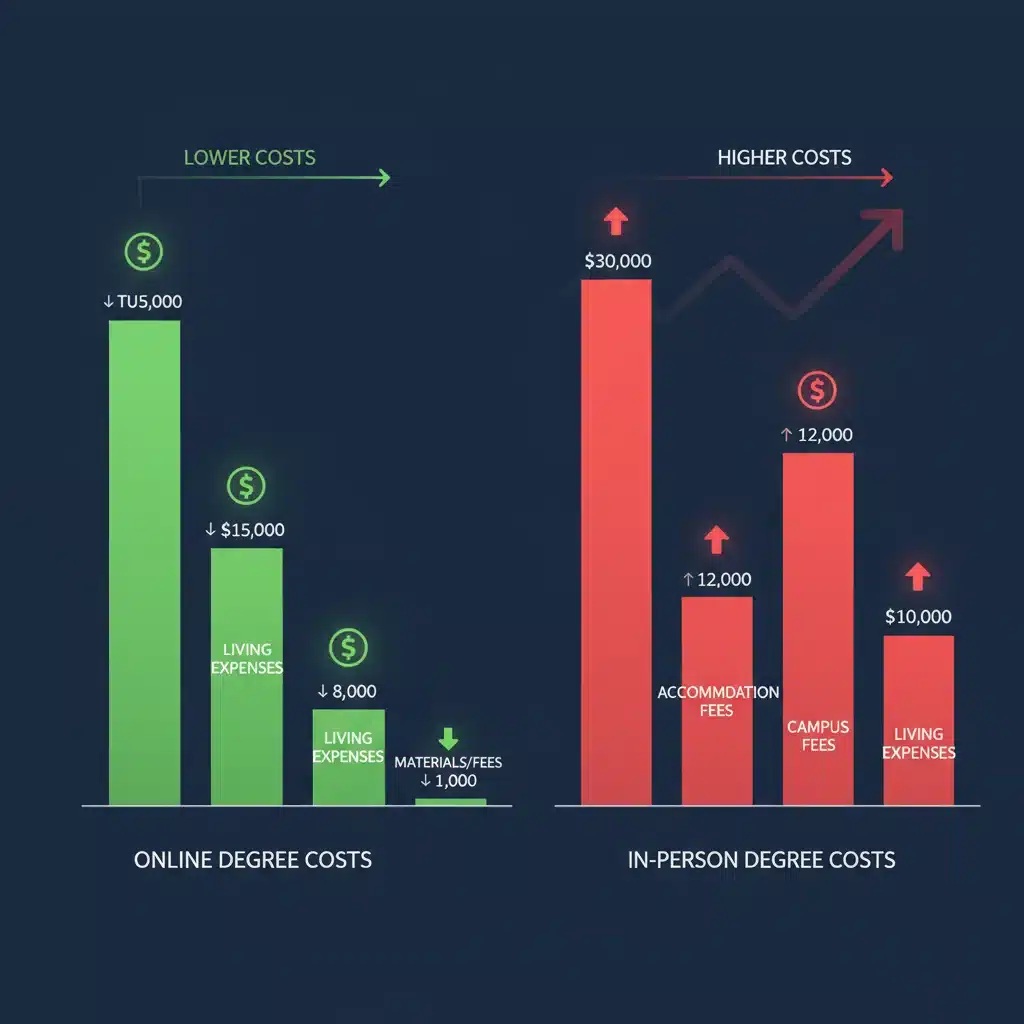
One of the most significant factors influencing the decision between an online vs in-person degree is cost. While tuition fees can vary widely by institution and program, online degrees often present a more affordable overall package due to reduced or eliminated expenses associated with campus living. In 2026, this financial disparity is expected to persist, making online education an attractive option for budget-conscious students.
Tuition and Fees
Historically, online programs have sometimes had slightly lower tuition fees per credit hour compared to their on-campus equivalents, though this gap has been narrowing. Many universities now charge the same tuition for both modalities, especially for highly sought-after programs. However, the real savings in online education often come from indirect costs. Students pursuing an online vs in-person degree typically save on:
- Room and Board: This is arguably the largest saving. Living at home or in cheaper off-campus accommodation significantly reduces expenses compared to university dorms or apartments near campus.
- Transportation: Commuting costs, including gas, public transport fares, and parking, are eliminated for online students.
- Campus Fees: Many universities charge mandatory fees for campus facilities, student services, and activities that online students may not utilize or are exempt from.
- Textbooks and Materials: While still necessary, online programs sometimes leverage open educational resources (OER) or digital textbooks, which can be more affordable than traditional print versions.
A 2024 study by the National Center for Education Statistics (NCES) projected that the average cost of attendance for a four-year public university (including tuition, fees, room, and board) would reach approximately $28,000 annually by 2026. For online students, this figure could be substantially lower, potentially by 30-50% if room and board are excluded. Private institutions, of course, command much higher figures, making the savings even more pronounced for online learners.
Opportunity Costs and Financial Aid
Beyond direct expenses, opportunity costs play a crucial role. Students pursuing an online vs in-person degree often have different financial situations. Online students are frequently working professionals, allowing them to continue earning income while studying, thus mitigating the financial strain of education. In contrast, many traditional students pause or significantly reduce their work hours, incurring a substantial opportunity cost in lost wages.
Financial aid is available for both online and in-person programs, including federal grants, loans, and scholarships. However, the amount and type of aid can sometimes differ based on enrollment status (full-time vs. part-time) and residency requirements for certain scholarships. It’s imperative for prospective students to research financial aid options thoroughly for both modalities to understand the true net cost of their chosen path. The financial implications are a cornerstone of the online vs in-person degree debate, and in 2026, affordability remains a top priority for many.
Career Outcomes and Employability: Bridging the Gap
Perhaps the most critical concern for students is whether an online vs in-person degree offers comparable career outcomes and employer recognition. Historically, there was a perception that online degrees were somehow inferior. However, this perception has largely dissipated, especially for accredited programs from reputable institutions.
Employer Perceptions in 2026
Data from recent surveys (e.g., a 2023 study by Northeastern University) indicates that over 80% of employers now view online degrees as equally credible as traditional degrees, provided the institution is accredited. This shift is largely due to the widespread adoption of online learning by prestigious universities and the demonstrated success of online graduates in various industries. Employers in 2026 are increasingly focused on skills, competencies, and practical experience rather than solely on the mode of delivery of a degree. The ability to demonstrate a strong portfolio, relevant work experience (often gained concurrently with an online degree), and soft skills like adaptability and self-discipline are often more important than whether the degree was earned online or on campus.
For specific fields, such as technology, business, and healthcare administration, online degrees are particularly well-regarded, as these industries often embrace remote work and digital collaboration. The flexibility of online learning also allows students to pursue internships or part-time jobs relevant to their field, providing valuable real-world experience that can significantly boost their employability upon graduation. This direct application of knowledge is a strong argument in favor of the career outcomes for an online vs in-person degree.
Networking and Professional Development
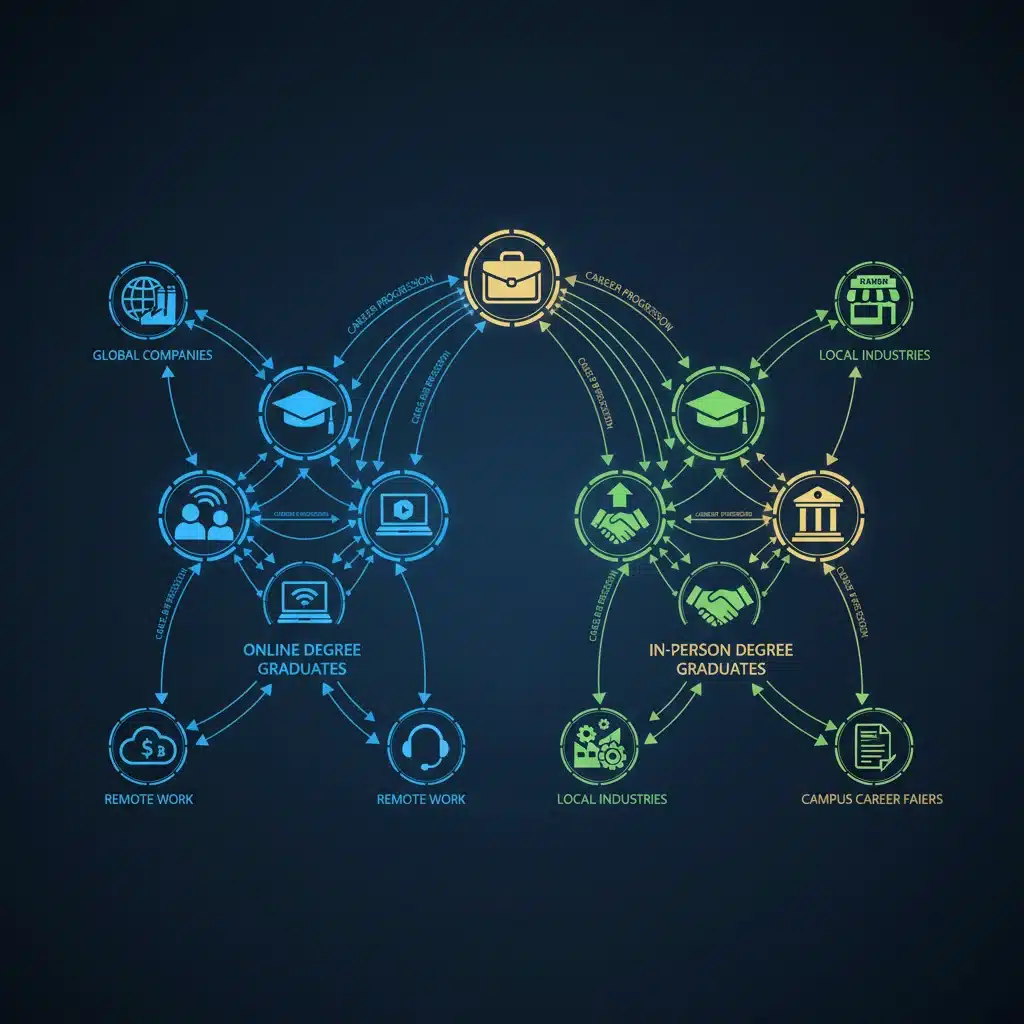
One area where in-person degrees traditionally held an advantage was in networking opportunities. Campus life, career fairs, and direct interactions with professors and peers provided a fertile ground for building professional connections. However, online programs have made significant strides in replicating and even enhancing these opportunities:
- Virtual Networking Events: Many online programs host virtual career fairs, alumni networking events, and guest speaker sessions.
- Online Forums and Communities: Dedicated online platforms allow students to connect with peers, collaborate on projects, and engage in discussions that can lead to professional relationships.
- Global Reach: Online degrees often attract a more diverse student body from different geographical locations and professional backgrounds, offering a broader network than might be available on a single campus.
- Mentorship Programs: Some online programs offer virtual mentorship with industry professionals, providing invaluable guidance and connections.
While the nature of networking differs, the effectiveness can be comparable. The key is active participation. Whether pursuing an online vs in-person degree, students must proactively engage with their academic and professional communities to maximize their career prospects. In 2026, the digital fluency gained through online learning can itself be a valuable asset in a world increasingly reliant on virtual collaboration.
Learning Experience and Student Life: A Matter of Fit
Beyond cost and career, the daily learning experience and overall student life are crucial considerations when choosing between an online vs in-person degree. Each modality offers a distinct environment that caters to different learning styles and personal preferences.
Flexibility vs. Structure
The hallmark of online learning is its unparalleled flexibility. Students can often access course materials, lectures, and assignments at any time, from any location with an internet connection. This asynchronous model is ideal for individuals with demanding work schedules, family responsibilities, or those who prefer to learn at their own pace. It fosters independence, time management skills, and self-discipline. However, this flexibility requires a high degree of self-motivation and organization. Without external deadlines and face-to-face interaction, some students may struggle to stay on track.
In-person degrees, conversely, offer a highly structured environment with fixed class schedules, regular campus attendance, and direct interaction with professors and peers. This structure can be beneficial for students who thrive on routine, require immediate clarification, or benefit from the accountability of scheduled classes. The immersive nature of a campus environment can also minimize distractions, allowing for a more focused academic experience. The choice between this flexibility and structure is a key differentiator in the online vs in-person degree decision.
Interaction and Engagement
Interaction in an in-person setting is immediate and often spontaneous. Classroom discussions, group projects, and informal conversations with professors during office hours contribute to a rich, dynamic learning environment. The social aspect of campus life – joining clubs, attending events, and living in dorms – provides a holistic educational experience that extends beyond academics, fostering personal development and lifelong friendships.
Online interaction, while different, can be equally engaging. Modern online learning platforms facilitate robust discussions through forums, video conferencing, and collaborative tools. Group projects are common, allowing students to work together virtually. Many online programs also incorporate synchronous elements, such as live virtual classes or webinars, to foster real-time interaction. While the social experience may be less traditional, online communities can be incredibly supportive and intellectually stimulating, especially for students who prefer digital communication or are geographically dispersed. When evaluating online vs in-person degree, consider your preferred mode of interaction and how you best engage with learning materials and peers.
Access to Resources and Support
Traditional campuses offer immediate access to a wealth of resources: libraries, labs, career services, counseling centers, and recreational facilities. The physical proximity to these services can be a significant advantage for in-person students. However, online institutions and programs have invested heavily in providing comparable virtual resources. Online libraries offer extensive digital databases, virtual labs simulate hands-on experiences, and career services are often available through online appointments and workshops. Technical support, academic advising, and mental health services are increasingly offered remotely, ensuring that online students have access to the support they need. The key is to research what specific resources are available for the online vs in-person degree program you are considering.
Accreditation and Reputation: Ensuring Quality in 2026
Regardless of whether you choose an online vs in-person degree, accreditation is paramount. Accreditation ensures that a program meets specific quality standards set by recognized accrediting bodies. Employers and other educational institutions typically only recognize degrees from accredited programs. In 2026, the importance of accreditation remains unwavering, providing a benchmark for educational quality.
Regional vs. National Accreditation
Most reputable universities, whether offering online or in-person programs, hold regional accreditation, which is considered the gold standard and is crucial for transferring credits or pursuing further education. National accreditation is typically for vocational or technical schools. Always verify an institution’s accreditation status before enrolling. Many institutions offering online degrees are well-established, regionally accredited universities that have simply extended their offerings to a digital format, ensuring the same academic rigor and reputation as their on-campus programs.
Program-Specific Accreditation
In addition to institutional accreditation, some fields have program-specific accreditation (e.g., ABET for engineering, AACSB for business, CCNE for nursing). These specialized accreditations further validate the quality and industry relevance of a specific degree program, whether delivered online or in-person. When comparing an online vs in-person degree, always check for both institutional and program-specific accreditation to ensure your qualification will be recognized and valued.
The Hybrid Model: Best of Both Worlds?
As the debate between an online vs in-person degree continues, a third option has gained significant traction: the hybrid model. Hybrid programs blend elements of both online and in-person learning, offering a flexible yet structured approach. Students might attend some classes on campus and complete others online, or alternate between intensive on-campus residencies and online coursework. This model attempts to combine the flexibility of online learning with the benefits of face-to-face interaction and campus resources.
For many, the hybrid model represents an ideal compromise, allowing them to balance personal commitments while still benefiting from direct engagement with professors and peers. It can be particularly effective for graduate programs or disciplines that require hands-on components. As we move into 2026, the availability and sophistication of hybrid programs are expected to grow, offering even more tailored educational pathways for diverse student needs. When considering your options, explore whether a hybrid approach could offer the optimal balance for your learning style and lifestyle, effectively bridging the gap between an online vs in-person degree.
Making Your Decision: A Personalized Approach for 2026
Ultimately, the choice between an online vs in-person degree is deeply personal and depends on a confluence of factors. There is no universally “better” option; rather, there is the option that is best suited for your unique circumstances in 2026. To make an informed decision, consider the following:
- Learning Style: Are you a self-starter who thrives with independence, or do you prefer structured environments and immediate feedback?
- Financial Situation: What is your budget for tuition, living expenses, and lost income? Can an online degree offer the necessary affordability?
- Career Goals: Does your desired industry or profession have a preference for one modality over the other, or is it solely focused on skills and accreditation?
- Life Commitments: Do you have work, family, or other responsibilities that necessitate a flexible learning schedule?
- Social Preferences: Do you prioritize the traditional campus experience and social networking, or are you comfortable building connections in virtual environments?
- Technological Comfort: Are you proficient with digital tools and comfortable navigating online learning platforms?
Gather information from multiple institutions, speak to current students and alumni from both online and in-person programs, and consult with academic advisors. Look beyond the headlines and delve into the specifics of program curricula, faculty expertise, and student support services. The best degree is the one that empowers you to achieve your academic and professional aspirations, providing a solid foundation for success in 2026 and beyond.
Conclusion: Navigating Your Educational Path in 2026
The decision to pursue an online vs in-person degree in 2026 is a significant one, with far-reaching implications for your finances, career, and personal development. Both pathways offer legitimate, high-quality educational experiences, each with its own set of advantages. Online degrees provide unparalleled flexibility and often greater affordability, making higher education accessible to a broader demographic, including working professionals and those with geographical constraints. They cultivate self-discipline, digital literacy, and time management skills, which are increasingly valued in the modern workforce. The stigma once associated with online learning has largely faded, with employers recognizing the credibility of accredited online qualifications.
Conversely, in-person degrees offer a traditional, immersive campus experience, fostering immediate social interaction, direct access to physical resources, and a structured learning environment. The vibrant campus life, spontaneous networking opportunities, and the sense of community can contribute significantly to personal growth and a holistic educational journey. The choice between an online vs in-person degree is not about superiority, but about alignment with individual needs, preferences, and future goals.
As you weigh your options for 2026, remember to conduct thorough research, evaluate your personal circumstances, and consider what kind of learning environment will best enable you to thrive. Whether you choose the flexibility of an online program, the immersion of a traditional campus, or a blend of both through a hybrid model, the ultimate goal is to acquire knowledge, develop critical skills, and position yourself for a successful and fulfilling career. The future of education is diverse and dynamic, offering more pathways to success than ever before. Choose wisely, and embark on your educational journey with confidence.