Maximize 2026 Retirement: IRA and 401(k) Contribution Limits Guide

Anúncios
In the ever-evolving landscape of personal finance, planning for retirement is a cornerstone of long-term financial security. As we look towards 2026, understanding and maximizing your 2026 retirement contributions becomes paramount. The decisions you make today regarding your Individual Retirement Accounts (IRAs) and 401(k)s will significantly impact your financial well-being in the future. This comprehensive guide is designed to equip you with the knowledge and strategies necessary to navigate the anticipated 2026 contribution limits, ensuring you make the most of every opportunity to save.
Anúncios
Retirement planning isn’t just about setting money aside; it’s about strategic saving, understanding tax advantages, and leveraging the power of compound interest. With potential adjustments to contribution limits for 2026, staying informed is your first line of defense against missed opportunities. We’ll delve into the specifics of both IRA and 401(k) contributions, explore catch-up contributions for those aged 50 and over, and provide actionable tips to integrate these strategies into your broader financial plan. Whether you’re a seasoned investor or just starting your retirement journey, this article will serve as your essential resource for maximizing your 2026 retirement contributions.
Understanding the Importance of Maximizing Your 2026 Retirement Contributions
Why is it so crucial to focus on maximizing your 2026 retirement contributions? The answer lies in the fundamental principles of long-term wealth accumulation and tax efficiency. Every dollar you contribute to a retirement account, especially tax-advantaged ones like IRAs and 401(k)s, works harder for you over time. The earlier you start and the more you contribute, the greater the impact of compound interest, where your earnings begin to earn their own returns.
Anúncios
The Power of Compound Interest
Compound interest is often referred to as the eighth wonder of the world, and for good reason. It allows your investment to grow exponentially over time. Consider two individuals: one starts saving \$5,000 annually at age 25, the other at age 35. Even if the second individual contributes more later, the first individual will likely have a significantly larger nest egg due to those extra ten years of compounding. Maximizing your 2026 retirement contributions means giving your money more time and more capital to compound, leading to a much more substantial retirement fund.
Tax Advantages and Your 2026 Retirement Contributions
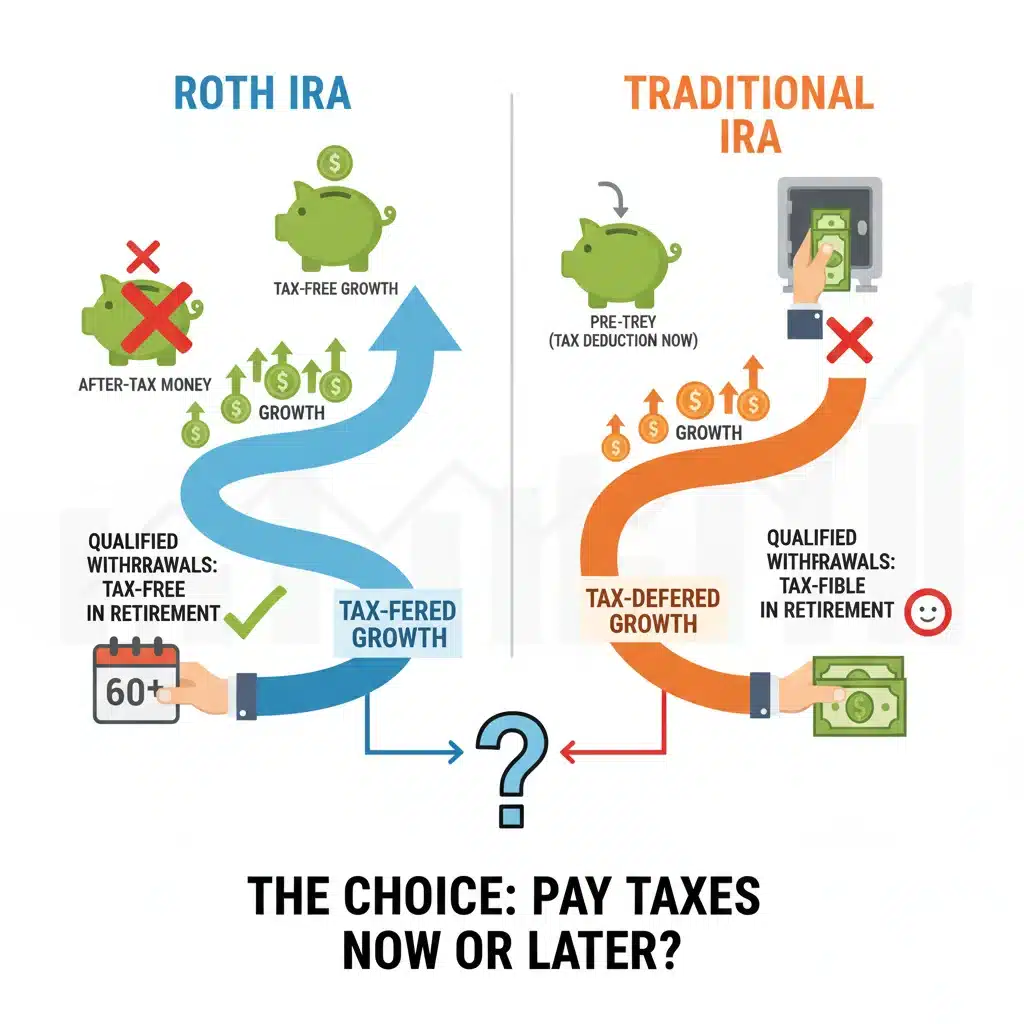
Beyond compound interest, retirement accounts offer significant tax benefits that can accelerate your savings. Traditional IRAs and 401(k)s often allow for pre-tax contributions, meaning you deduct your contributions from your taxable income in the year they are made. This can lower your current tax bill. Your investments then grow tax-deferred until retirement, when withdrawals are taxed as ordinary income. Roth IRAs and Roth 401(k)s, on the other hand, are funded with after-tax dollars. While you don’t get an upfront tax deduction, your qualified withdrawals in retirement are entirely tax-free. Understanding these differences is key to strategically maximizing your 2026 retirement contributions based on your current income, expected future income, and tax outlook.
By actively working to maximize your contributions, you’re not just saving for the future; you’re also optimizing your tax situation today and in retirement. This dual benefit makes focusing on your 2026 retirement contributions a smart financial move for everyone.
Anticipated 2026 IRA Contribution Limits: What You Need to Know
Individual Retirement Accounts (IRAs) are a popular choice for retirement savings due to their flexibility and tax advantages. For 2026, while official limits are typically announced later in the preceding year, we can anticipate adjustments based on inflation and economic trends. It’s crucial to stay updated on these figures to effectively plan your 2026 retirement contributions.
Traditional IRA Contributions
Traditional IRAs allow pre-tax contributions that can be tax-deductible, reducing your taxable income in the year of contribution. Earnings grow tax-deferred until retirement. For 2026, we expect the standard contribution limit to potentially increase from previous years, continuing the trend of inflation-adjusted changes. This limit applies to all eligible individuals, regardless of whether they are covered by a workplace retirement plan.
Roth IRA Contributions
Roth IRAs are funded with after-tax dollars, meaning your contributions are not tax-deductible. However, qualified withdrawals in retirement are entirely tax-free. Roth IRAs are particularly attractive to individuals who expect to be in a higher tax bracket in retirement than they are today. The contribution limit for Roth IRAs is generally the same as for Traditional IRAs, but eligibility is subject to income limitations. For 2026, these income thresholds are also expected to see adjustments.
Catch-Up Contributions for IRAs (Age 50 and Over)
For individuals aged 50 and over, the IRS allows for additional ‘catch-up’ contributions to IRAs. This provision is designed to help those closer to retirement boost their savings. The catch-up contribution amount is a fixed sum added on top of the standard limit. While specific 2026 figures will be confirmed, these catch-up contributions are a vital tool for older workers looking to maximize their 2026 retirement contributions and accelerate their retirement savings.
Navigating Income Limitations for Roth IRAs
It’s important to note that direct contributions to a Roth IRA are phased out for higher-income earners. If your modified adjusted gross income (MAGI) exceeds certain thresholds, you may be unable to contribute the full amount, or any amount, directly to a Roth IRA. However, the ‘Backdoor Roth IRA’ strategy remains a viable option for high-income earners. This involves contributing to a non-deductible Traditional IRA and then converting it to a Roth IRA. While this strategy has specific rules and potential tax implications, it’s a powerful way for those above the income limits to still make Roth IRA contributions and should be considered when planning your 2026 retirement contributions.
Anticipated 2026 401(k) Contribution Limits: A Deeper Dive
Employer-sponsored 401(k) plans are often the primary vehicle for retirement savings for many Americans. These plans offer higher contribution limits than IRAs and often include employer matching contributions, which are essentially free money for your retirement. Understanding the anticipated 2026 401(k) contribution limits is crucial for maximizing your 2026 retirement contributions through your workplace plan.
Standard 401(k) Contributions
The standard contribution limit for 401(k)s (and similar plans like 403(b)s, most 457 plans, and the Thrift Savings Plan) is significantly higher than IRA limits. This allows employees to defer a substantial portion of their income into a tax-advantaged account. For 2026, we can expect this limit to increase, reflecting inflation and economic growth. This limit applies to the employee’s elective deferrals.
Catch-Up Contributions for 401(k)s (Age 50 and Over)
Similar to IRAs, 401(k) plans also offer catch-up contributions for participants aged 50 and over. This additional amount, which is separate from the standard limit, allows older workers to save more aggressively as they approach retirement. The catch-up contribution amount for 401(k)s is typically higher than for IRAs, providing a significant boost to late-career savings. Incorporating these catch-up contributions is a vital strategy for maximizing your 2026 retirement contributions if you qualify.
Understanding Employer Matching Contributions
One of the most valuable features of a 401(k) plan is the employer match. Many companies will match a percentage of your contributions up to a certain limit. For example, an employer might match 50% of your contributions up to 6% of your salary. Failing to contribute enough to get the full employer match is like leaving free money on the table. Always prioritize contributing at least enough to receive the full match when planning your 2026 retirement contributions, as this immediately boosts your savings with no extra effort on your part.
Total 401(k) Contribution Limits (Employee + Employer)
It’s important to distinguish between the employee elective deferral limit and the total contribution limit. The total amount that can be contributed to a 401(k) in a year, including both employee contributions (pre-tax, Roth, and catch-up) and employer contributions (matching, profit-sharing, etc.), has a much higher overall limit. This total limit is also expected to be adjusted for 2026. While most individuals won’t reach this higher overall limit solely through their own contributions, it’s relevant for those with very generous employer contributions or for business owners contributing to their own plans.
Strategies for Maximizing Your 2026 Retirement Contributions
Knowing the limits is just the first step; implementing effective strategies is how you truly maximize your 2026 retirement contributions. Here are several actionable strategies to help you reach your savings goals.
1. Automate Your Savings
One of the simplest yet most effective strategies is to automate your contributions. Set up automatic transfers from your paycheck directly to your 401(k) or from your checking account to your IRA. This ensures consistency and removes the temptation to spend the money elsewhere. Even small, regular contributions add up significantly over time. Review your automated contributions annually and adjust them upwards, especially when limits increase or your income rises.
2. Prioritize Employer Match
As mentioned earlier, always contribute at least enough to your 401(k) to receive the full employer match. This is immediate, guaranteed return on your investment that you won’t find anywhere else. If you’re not contributing enough to get the full match, you’re essentially turning down free money for your retirement.
3. Increase Contributions with Raises or Bonuses
Whenever you receive a raise, bonus, or other unexpected windfall, consider redirecting a portion of that extra income directly into your retirement accounts. This is an excellent way to boost your 2026 retirement contributions without feeling a significant pinch in your regular budget. A common strategy is to increase your 401(k) contribution percentage by 1% or 2% with each raise.
4. Utilize Catch-Up Contributions
If you are age 50 or older, take full advantage of catch-up contributions for both your IRA and 401(k). These additional contributions can significantly accelerate your savings in the years leading up to retirement, helping to compensate for periods when you may not have been able to contribute as much.
5. Understand and Leverage Roth vs. Traditional
Carefully consider whether a Traditional or Roth account (or a combination of both) is best for your situation. If you expect to be in a higher tax bracket in retirement, a Roth account might be more beneficial due to tax-free withdrawals. If you’re in a high tax bracket now, a Traditional account’s upfront tax deduction might be more appealing. This decision is critical for optimizing the tax efficiency of your 2026 retirement contributions.
6. Explore Backdoor Roth IRA (if applicable)
For high-income earners who exceed the Roth IRA income limits, the Backdoor Roth IRA strategy allows you to contribute indirectly. Consult with a financial advisor to ensure you execute this strategy correctly and understand any potential pro-rata rules if you have existing pre-tax IRA balances.
7. Consider a Spousal IRA
If you are married and one spouse earns little or no income, a Spousal IRA allows the working spouse to contribute to a separate IRA for the non-working spouse. This can effectively double your household’s IRA contributions and further boost your combined 2026 retirement contributions.
8. Review and Adjust Annually
Financial situations change, and so do IRS limits. Make it a habit to review your retirement contributions at least once a year, preferably at the end of the year or beginning of the new year, to ensure you are on track to maximize your 2026 retirement contributions and beyond. Adjust your contribution percentages as needed to align with new limits and your personal financial goals.

Beyond IRAs and 401(k)s: Other Retirement Savings Vehicles
While IRAs and 401(k)s are the primary focus for maximizing your 2026 retirement contributions, it’s worth noting that other retirement savings vehicles exist and may be suitable depending on your employment situation and financial goals. Diversifying your retirement savings strategy can offer additional benefits and flexibility.
Health Savings Accounts (HSAs)
Often hailed as a ‘triple tax advantage’ account, Health Savings Accounts (HSAs) offer an incredible opportunity for long-term savings, especially for those with high-deductible health plans. Contributions are tax-deductible, earnings grow tax-free, and qualified withdrawals for medical expenses are also tax-free. If you don’t use the funds for medical expenses in the short term, an HSA can effectively function as an additional retirement account after age 65, as withdrawals for non-medical purposes are taxed as ordinary income, similar to a Traditional IRA. For 2026, HSA contribution limits are also expected to adjust, making them an excellent complement to your IRA and 401(k) contributions.
SEP IRAs and SIMPLE IRAs (for Small Business Owners/Self-Employed)
For self-employed individuals and small business owners, Simplified Employee Pension (SEP) IRAs and Savings Incentive Match Plan for Employees (SIMPLE) IRAs offer higher contribution limits than traditional IRAs. SEP IRAs allow for very substantial contributions, calculated as a percentage of your net earnings, making them ideal for those with fluctuating income. SIMPLE IRAs are a good option for small businesses looking to offer a retirement plan with relatively low administrative costs. If you fall into these categories, exploring these options can significantly boost your overall 2026 retirement contributions.
Brokerage Accounts
While not tax-advantaged in the same way as IRAs or 401(k)s, a taxable brokerage account can serve as a supplemental retirement savings vehicle once you’ve maximized your contributions to tax-advantaged accounts. These accounts offer complete flexibility regarding withdrawals and investment choices, and long-term capital gains are typically taxed at lower rates than ordinary income. They can provide an excellent source of liquidity in early retirement or for specific financial goals.
Common Pitfalls to Avoid When Planning Your 2026 Retirement Contributions
Even with the best intentions, certain mistakes can derail your efforts to maximize your 2026 retirement contributions. Being aware of these common pitfalls can help you avoid them.
1. Not Starting Early Enough
The biggest enemy of retirement savings is procrastination. The magic of compound interest works best over long periods. Delaying your contributions, even by a few years, can significantly reduce your potential nest egg. Start saving as soon as possible, even if it’s a small amount, and gradually increase your contributions.
2. Failing to Max Out Employer Match
This cannot be stressed enough: not contributing enough to get your full employer match is leaving free money on the table. It’s one of the easiest ways to boost your retirement savings and should be your absolute minimum contribution goal.
3. Cashing Out Retirement Accounts Early
Resist the temptation to withdraw funds from your retirement accounts before retirement. Early withdrawals typically incur not only income taxes but also a 10% penalty (with some exceptions). This severely hampers your long-term growth and undermines your efforts to maximize your 2026 retirement contributions.
4. Being Too Conservative with Investments
While it’s important to manage risk, being overly conservative, especially when you’re young, can lead to missed growth opportunities. Over a long investment horizon, stocks generally outperform bonds and cash. Ensure your asset allocation is appropriate for your age, risk tolerance, and time horizon. Rebalance your portfolio periodically to maintain your desired allocation.
5. Ignoring Inflation
The cost of living will likely be much higher in retirement than it is today. When planning your 2026 retirement contributions, don’t just think about accumulating a specific dollar amount; consider the purchasing power of that money in the future. Inflation erodes purchasing power, so your investments need to grow at a rate that outpaces inflation to maintain your lifestyle.
6. Not Reviewing Your Plan Regularly
Life changes, and so should your retirement plan. Major life events like marriage, divorce, having children, changing jobs, or receiving an inheritance should prompt a review of your retirement strategy. Additionally, annual reviews ensure you’re aware of new contribution limits and can adjust your plan accordingly to maximize your 2026 retirement contributions and beyond.
Conclusion: Securing Your Financial Future Through Strategic 2026 Retirement Contributions
Maximizing your 2026 retirement contributions is not merely a financial task; it’s an investment in your future peace of mind and financial independence. By understanding the anticipated IRA and 401(k) limits, leveraging catch-up contributions, and implementing smart savings strategies, you can significantly enhance your retirement outlook. The power of compound interest, coupled with the tax advantages of these accounts, creates a potent force for wealth accumulation that should not be underestimated.
Remember, the journey to a secure retirement is a marathon, not a sprint. Consistency, informed decision-making, and regular reviews of your financial plan are key. Take advantage of every opportunity to save, prioritize your employer’s matching contributions, and adapt your strategy as limits and your personal circumstances evolve. By taking proactive steps today to maximize your 2026 retirement contributions, you are laying a strong foundation for a comfortable and fulfilling retirement tomorrow. Start planning now, stay disciplined, and watch your retirement dreams become a reality.