Federal Housing Initiative 2026: 15% Cost Reduction for First-Time Homebuyers

Anúncios
Breaking news for aspiring homeowners across the nation! The federal government has officially announced a groundbreaking new initiative for 2026, designed to significantly alleviate the financial burden on first-time buyers. This ambitious program, dubbed the Federal Housing Initiative 2026, aims to reduce overall housing costs by an impressive 15%. This is a monumental step towards making homeownership more accessible and affordable for millions of Americans who have long faced an uphill battle against rising property values and interest rates. The announcement has sent ripples of optimism through the real estate market and among potential homeowners, signaling a new era of support for those looking to plant roots and build equity.
Anúncios
For years, the dream of owning a home has seemed increasingly out of reach for many, particularly for younger generations and individuals with moderate incomes. The confluence of soaring home prices, competitive markets, and stringent lending requirements has created a challenging landscape. The Federal Housing Initiative 2026 is poised to address these critical issues head-on, offering a beacon of hope and a tangible pathway to homeownership. This comprehensive program is not just about reducing prices; it encompasses a multi-faceted approach to affordability, including potential subsidies, revised lending standards, and educational resources.
Understanding the intricacies of this new Federal Housing Initiative is crucial for anyone considering buying their first home in the coming years. This article will delve deep into the specifics of the program, exploring its core components, eligibility criteria, the mechanisms through which the 15% cost reduction will be achieved, and the potential long-term impacts on the housing market and the economy at large. Our goal is to provide a clear, comprehensive guide to help you navigate this exciting development and prepare for the opportunities it presents.
Anúncios
The Genesis of the Federal Housing Initiative 2026
The concept behind the Federal Housing Initiative 2026 has been brewing for some time, born out of a recognized need to address the growing housing affordability crisis. Policymakers and economic experts have observed a widening gap between housing costs and median incomes, leading to decreased homeownership rates and increased financial strain on households. This initiative represents a concerted effort by the federal government to intervene strategically and create a more equitable housing market.
Discussions began several years ago, involving various stakeholders including housing advocates, real estate professionals, financial institutions, and community leaders. The primary objective was to design a program that was not only impactful but also sustainable and scalable. Early proposals focused on a range of interventions, from direct subsidies to tax incentives and regulatory reforms. The final framework for the Federal Housing Initiative 2026 is a culmination of extensive research, pilot programs, and bipartisan collaboration, aiming for a holistic solution.
The impetus for such a significant undertaking stems from several key factors. First, the demographic shift: a large segment of the population, particularly millennials and Gen Z, are reaching prime homebuying age but are disproportionately affected by current market conditions. Second, the economic implications: a healthy housing market is a cornerstone of a robust economy, and declining homeownership can have ripple effects on wealth accumulation, consumer spending, and overall economic stability. Third, social equity: ensuring access to stable and affordable housing is considered a fundamental right and a crucial component of social well-being.
By launching the Federal Housing Initiative 2026, the government is making a clear statement about its commitment to supporting first-time homebuyers and fostering a more inclusive housing market. This program is not just a temporary fix but a foundational change designed to create lasting positive impacts for generations to come.
Dissecting the 15% Cost Reduction for First-Time Buyers
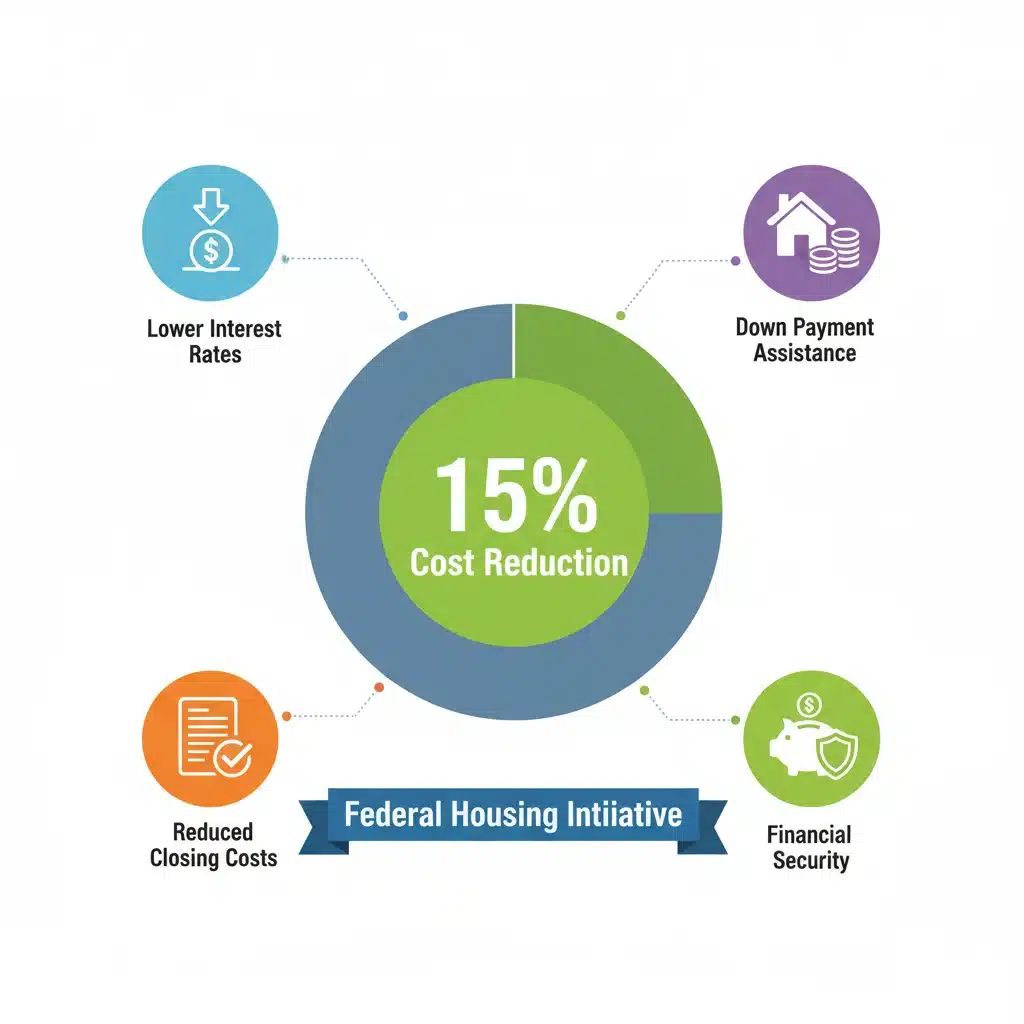
The headline figure of a 15% cost reduction is undoubtedly the most enticing aspect of the new Federal Housing Initiative 2026. But how exactly will this reduction be achieved? It’s important to understand that this isn’t a single, uniform discount but rather a combination of measures designed to collectively lower the financial burden. The initiative focuses on several key areas:
1. Enhanced Down Payment Assistance Programs
One of the largest hurdles for first-time buyers is accumulating a sufficient down payment. The Federal Housing Initiative will significantly expand and enhance existing federal and state-level down payment assistance programs. This could include increased grant amounts, more flexible repayment terms, or even forgivable loans for eligible buyers. The goal is to reduce the upfront cash required, making the initial leap into homeownership less daunting.
2. Reduced Interest Rates and Loan Fees
The initiative is expected to introduce mechanisms to lower effective interest rates for qualifying first-time buyer mortgages. This could be through direct federal subsidies to lenders, allowing them to offer more favorable rates, or through specific government-backed loan products with inherently lower rates. Additionally, certain loan origination fees and other closing costs traditionally borne by buyers may be reduced or capped under the new program, further contributing to the 15% overall saving.
3. Property Tax Relief and Insurance Subsidies
Beyond the initial purchase, ongoing costs like property taxes and homeowner’s insurance can add substantial long-term expenses. The Federal Housing Initiative 2026 may include provisions for temporary property tax relief for first-time buyers, such as a percentage reduction for the first few years of ownership. Similarly, exploring options for subsidized homeowner’s insurance premiums, particularly in high-risk areas, could further contribute to the overall cost savings and make homeownership more sustainable.
4. Streamlined and Lower-Cost Appraisal/Inspection Processes
The process of buying a home often involves various fees for appraisals, inspections, and legal services. The Federal Housing Initiative could introduce standardized, government-approved processes that are more cost-effective. This might involve partnerships with certified appraisers and inspectors to offer services at reduced rates for first-time buyers participating in the program, thus chipping away at the total transaction costs.
It’s crucial to note that the 15% reduction is an average target. Individual savings may vary based on location, property value, and specific program components utilized. However, the comprehensive nature of the Federal Housing Initiative ensures that multiple avenues for cost reduction are available to maximize benefits for eligible participants.
Eligibility Criteria for the Federal Housing Initiative 2026
To ensure the benefits of the Federal Housing Initiative are directed towards those who need them most, specific eligibility criteria will be established. While the full details are still being finalized, preliminary information suggests a focus on genuine first-time homebuyers and those within certain income brackets.
Definition of a First-Time Homebuyer
Typically, a first-time homebuyer is defined as an individual who has not owned a primary residence in the past three years. This definition is likely to remain consistent for the Federal Housing Initiative 2026, though there might be specific exceptions for single parents or individuals who have lost a home due to foreclosure or natural disaster.
Income Limitations and Geographic Focus
The initiative will likely include income caps to ensure that the program primarily benefits low-to-moderate income earners. These caps will probably be set as a percentage of the Area Median Income (AMI), adjusted for family size and specific metropolitan areas to reflect varying costs of living. There might also be a geographic component, with additional incentives or resources directed towards underserved communities or areas with particularly high housing costs.
Credit Score and Debt-to-Income Ratios
While the program aims to make homeownership more accessible, responsible lending practices will still be paramount. Applicants will likely need to demonstrate a reasonable credit history and manageable debt-to-income (DTI) ratios. However, the Federal Housing Initiative might introduce more flexible DTI guidelines or provide resources for credit counseling to help aspiring buyers improve their financial standing to meet the requirements.
Mandatory Homebuyer Education
A key component of the Federal Housing Initiative 2026 is likely to be mandatory homebuyer education courses. These courses would equip first-time buyers with essential knowledge about the homebuying process, financial management, property maintenance, and understanding their rights and responsibilities as homeowners. This educational aspect is crucial for long-term homeownership success and sustainability.
Prospective buyers are encouraged to start preparing now by reviewing their credit reports, saving for a down payment (even if smaller), and attending local homebuyer workshops. Staying informed about the evolving eligibility requirements will be key to taking advantage of this significant opportunity.
Anticipated Impact on the Housing Market and Economy
The introduction of the Federal Housing Initiative 2026 is expected to have far-reaching implications, not just for individual buyers but for the broader housing market and the national economy. Its effects will likely be felt across various sectors, from construction to finance.
Increased Homeownership Rates
The most immediate and direct impact is an anticipated increase in homeownership rates, especially among demographic groups that have been historically underserved or priced out of the market. By reducing the financial barriers, the initiative will empower more individuals and families to achieve the dream of owning a home, fostering greater stability and wealth creation.
Stimulation of the Construction Sector
With an expected surge in demand for affordable housing, the Federal Housing Initiative could stimulate the construction sector. Developers may be incentivized to build more entry-level and moderately priced homes, leading to job creation in construction, manufacturing of building materials, and related industries. This could help address the existing housing supply shortage, a critical factor contributing to high prices.
Stabilization of Housing Prices (Long-Term)
While an initial increase in demand might put some upward pressure on prices, the long-term effect of increased supply (due to stimulated construction) coupled with direct cost reductions could lead to a more stable and balanced housing market. The initiative aims to create a more sustainable pricing environment rather than just a temporary dip.
Economic Growth and Wealth Accumulation
Homeownership is a significant driver of personal wealth and economic stability. By expanding access to homeownership, the Federal Housing Initiative will contribute to greater wealth accumulation for more Americans, leading to increased consumer confidence and spending. This can have a positive ripple effect throughout the economy, boosting local businesses and fostering community development.
Challenges and Potential Unintended Consequences
While overwhelmingly positive, it’s also important to consider potential challenges. A sudden influx of buyers could exacerbate supply issues in the short term, potentially driving up prices in certain micro-markets before new construction catches up. Policymakers will need to closely monitor market dynamics and be prepared to adjust the program as needed to mitigate any unintended consequences and ensure its long-term effectiveness.  Furthermore, ensuring that the program benefits are equitably distributed across all communities, regardless of socio-economic status, will be a continuous focus. The initiative must be designed to prevent any exacerbation of existing inequalities.
Preparing for the Federal Housing Initiative 2026: A Step-by-Step Guide
For those eager to take advantage of the Federal Housing Initiative 2026, proactive preparation is key. While the full details are still being fleshed out, there are several steps you can take now to position yourself for success.
1. Assess Your Financial Health
Start by getting a clear picture of your current financial situation. Review your credit score and credit report for any inaccuracies or areas for improvement. Begin to pay down high-interest debt and build a solid savings foundation. The stronger your financial profile, the better your chances of qualifying for the best terms under the Federal Housing Initiative.
2. Research and Understand Local Market Conditions
Even with federal assistance, local market conditions will play a significant role. Research property values, inventory levels, and average time-on-market in your desired areas. Understanding these dynamics will help you set realistic expectations and make informed decisions once the program officially launches.
3. Attend Homebuyer Education Workshops
Many non-profit organizations and housing agencies offer free or low-cost homebuyer education courses. Attending these now can provide invaluable knowledge about the homebuying process, budgeting, and understanding loan options. This will also prepare you for any mandatory education requirements under the Federal Housing Initiative 2026.
4. Consult with Housing Counselors and Lenders
Seek advice from HUD-approved housing counselors who can provide personalized guidance on preparing for homeownership. Additionally, start building a relationship with a mortgage lender. While the specific loan products of the Federal Housing Initiative are not yet available, a lender can help you understand current pre-qualification requirements and advise on steps to take.
5. Stay Informed About Program Updates
The specifics of the Federal Housing Initiative 2026 will continue to be refined. Regularly check official government housing websites, subscribe to newsletters from reputable housing organizations, and follow financial news outlets for updates. Being well-informed will ensure you don’t miss any crucial details or application deadlines.
6. Define Your Homeownership Goals
Reflect on what kind of home you’re looking for, your ideal location, and your long-term housing needs. Having a clear vision will help you act decisively when the Federal Housing Initiative becomes fully operational and you begin your home search.
The Long-Term Vision: A More Accessible Housing Market
The Federal Housing Initiative 2026 is more than just a temporary relief package; it represents a long-term vision for a more accessible and equitable housing market in the United States. The government’s aim is not only to help individuals purchase homes but also to foster sustainable homeownership and build stronger, more resilient communities.
By investing in first-time buyers, the initiative is essentially investing in the future economic stability of the nation. Homeowners tend to be more civically engaged, contribute to local economies, and build generational wealth that can uplift entire families. The program’s focus on education and responsible lending practices also suggests a commitment to preventing past housing market pitfalls, ensuring that new homeowners are well-prepared for the responsibilities that come with property ownership.
Furthermore, the Federal Housing Initiative could serve as a blueprint for future housing policies, encouraging innovation in affordable housing solutions and prompting collaboration between public and private sectors. It highlights a shift towards proactive measures to address systemic issues in housing affordability, rather than just reactive responses to crises.
The success of this initiative will undoubtedly depend on its implementation, ongoing monitoring, and adaptability to changing economic conditions. However, the foundational goal remains clear: to open the doors of homeownership to a broader segment of the population, thereby strengthening the social fabric and economic health of the country.
Conclusion: A New Horizon for First-Time Homebuyers
The announcement of the Federal Housing Initiative 2026 marks a pivotal moment for aspiring homeowners across the United States. With its ambitious goal of reducing housing costs by 15% for first-time buyers, this program offers a tangible pathway to achieving the dream of homeownership that has felt increasingly out of reach for many. Through a combination of enhanced down payment assistance, reduced interest rates, potential tax relief, and streamlined processes, the initiative addresses multiple facets of housing affordability.
While the full details are still emerging, the strategic intent is clear: to foster a more equitable, accessible, and sustainable housing market. This initiative is poised to not only boost homeownership rates but also stimulate economic growth, strengthen communities, and empower a new generation of homeowners. For those contemplating their first home purchase, the time to prepare is now. By understanding the program’s potential, assessing personal finances, and staying informed, prospective buyers can position themselves to fully capitalize on the unprecedented opportunities presented by the Federal Housing Initiative 2026. This is a moment of significant positive change, promising a brighter future for countless families across the nation.