Student Loan Forgiveness 2026: New Programs & Relief Options
Anúncios
Student Loan Forgiveness in 2026: 4 New Programs Offering Up to $10,000 in Relief
For millions of Americans burdened by educational debt, the prospect of student loan forgiveness is a beacon of hope. As we look towards 2026, significant changes and new opportunities are emerging in the landscape of student loan relief. This comprehensive guide will delve into the anticipated developments, focusing specifically on four new programs that could offer substantial relief, potentially up to $10,000, for eligible borrowers. Understanding these changes is crucial for anyone seeking to alleviate their financial burden and move towards a more secure financial future.
Anúncios
The journey through student loan repayment can be complex and daunting. With fluctuating policies and ever-evolving programs, staying informed is key. This article aims to demystify the upcoming opportunities for student loan forgiveness 2026, providing clear, actionable insights into how you might qualify and what steps you need to take. We’ll explore the nuances of each program, discuss eligibility criteria, and offer practical advice to help you navigate the application process successfully.
The Evolving Landscape of Student Loan Forgiveness
The discussion around student loan forgiveness has been at the forefront of national policy debates for years. The sheer volume of outstanding student debt in the United States underscores the urgent need for effective solutions. While past initiatives have provided some relief, the year 2026 is expected to bring forward new, targeted programs designed to address specific borrower needs and provide more widespread assistance. These programs are not just about alleviating individual debt; they are also seen as a way to stimulate the economy, empower individuals to pursue higher education without crippling financial fears, and foster greater social mobility.
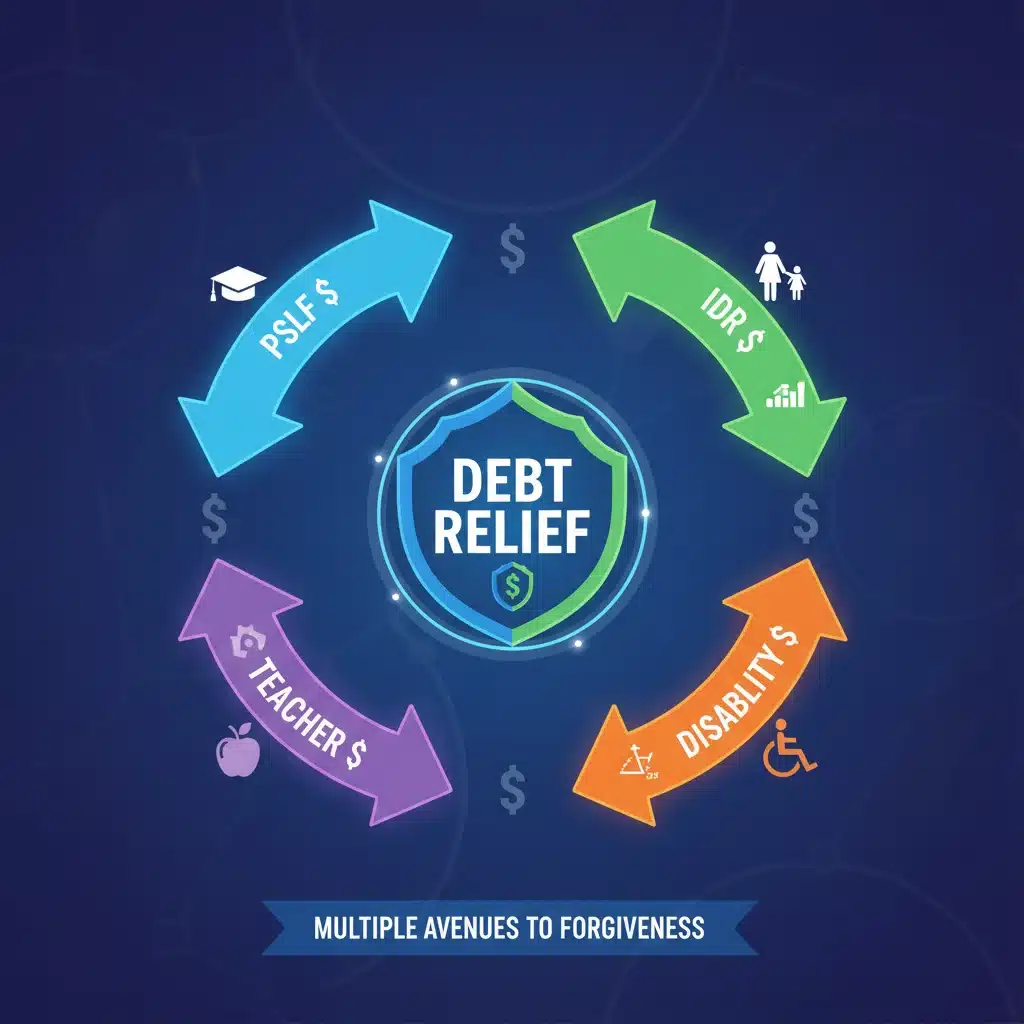
Understanding the historical context of student loan forgiveness is important. Previous attempts at broad-based forgiveness have faced legal challenges and political hurdles. However, the current administration and legislative bodies are continually working to refine and introduce programs that can withstand scrutiny and deliver tangible results. The focus for 2026 appears to be on a multi-pronged approach, combining existing income-driven repayment (IDR) plan adjustments with new, specialized initiatives. This strategy aims to create a more resilient and accessible framework for debt relief, ensuring that a broader range of borrowers can find pathways to forgiveness.
Anúncios
It’s vital for borrowers to distinguish between temporary relief measures and permanent forgiveness programs. While payment pauses and interest waivers have provided short-term breathing room, the programs we will discuss for student loan forgiveness 2026 are geared towards permanent debt cancellation, offering a more definitive solution to the long-term financial strain caused by student loans. These new programs are often designed with specific criteria that reflect a commitment to supporting those most in need, such as low-income borrowers, public service workers, or individuals who were misled by their educational institutions.
Navigating the complex world of student loan policies can be overwhelming. Many borrowers miss out on opportunities simply because they are unaware of the available programs or find the application process too complicated. This article serves as your essential guide to the anticipated changes, ensuring you are well-equipped to take advantage of the student loan forgiveness 2026 initiatives. By staying informed and proactive, you can significantly improve your chances of securing the financial relief you deserve.
Program 1: Enhanced Income-Driven Repayment (IDR) Forgiveness
One of the most significant avenues for student loan forgiveness 2026 will likely come through enhancements to existing Income-Driven Repayment (IDR) plans. While not entirely new, the proposed adjustments aim to make forgiveness more accessible and faster for millions of borrowers. The core principle of IDR plans is to make monthly loan payments affordable by capping them at a percentage of a borrower’s discretionary income. After a certain period of payments (typically 20 or 25 years, depending on the plan and loan type), any remaining balance is forgiven. The upcoming changes are poised to shorten this timeline for many.
The anticipated enhancements include reducing the number of years required for forgiveness, particularly for borrowers with lower original loan balances. For example, some proposals suggest that borrowers with original loan balances under a certain threshold (e.g., $12,000) could see forgiveness after as few as 10 years of payments, significantly accelerating the path to relief. This targeted approach aims to help those who borrowed smaller amounts but have struggled to repay due to lower incomes or other financial hardships. Furthermore, the definition of ‘discretionary income’ might be adjusted to be more favorable to borrowers, leading to lower monthly payments and a greater likelihood of reaching forgiveness sooner.
Another crucial change under consideration is the inclusion of more payment periods that count towards forgiveness. Historically, certain periods of deferment or forbearance did not count. The new rules might retroactively credit these periods, bringing many borrowers closer to their forgiveness date. This retrospective counting is a massive benefit, acknowledging the financial difficulties many faced during economic downturns or personal crises. It ensures that periods where borrowers were unable to make payments due to hardship do not penalize them in their journey towards forgiveness.
To qualify for enhanced IDR forgiveness, borrowers typically need to be enrolled in an eligible IDR plan. This involves annually recertifying their income and family size. For 2026, it’s expected that the process for enrollment and recertification will be streamlined, making it easier for borrowers to maintain their eligibility. It’s imperative for anyone currently on an IDR plan, or considering one, to stay informed about these potential changes. Even if you’ve been on an IDR plan for years, these enhancements could drastically alter your timeline for complete student loan forgiveness 2026.
Borrowers should actively review their current repayment plan and consider if an IDR plan, especially with the upcoming enhancements, is the best option for them. The Department of Education usually provides tools and resources to help borrowers understand their options and calculate potential savings. Consulting with a financial advisor specializing in student loans can also provide personalized guidance, ensuring you make the most informed decision for your financial future.
Program 2: Public Service Loan Forgiveness (PSLF) Expansion
The Public Service Loan Forgiveness (PSLF) program has been a lifeline for many dedicated public servants, but it has also been plagued by complexity and low approval rates. For 2026, we anticipate significant expansions and simplifications to the PSLF program, making student loan forgiveness more attainable for those who dedicate their careers to public service. The core idea of PSLF is to forgive the remaining balance on Direct Loans after 120 qualifying monthly payments while working full-time for a qualifying employer.
The proposed expansions aim to address several long-standing issues. One key area of focus is broadening the definition of ‘qualifying employment.’ Historically, some types of non-profit or government work were excluded, leading to confusion and frustration. The new rules might encompass a wider range of public service roles, ensuring that more individuals who serve their communities are eligible for relief. This could include expanding eligibility to certain types of contractors or specific non-profit roles that were previously overlooked. This expansion would significantly increase the number of individuals who can benefit from student loan forgiveness 2026 through PSLF.
Another crucial improvement is expected in the counting of qualifying payments. The temporary PSLF waiver, which allowed past payments that previously didn’t count to be included, demonstrated the immense need for flexibility. It’s highly probable that some aspects of this waiver will be made permanent or integrated into the standard PSLF rules. This could mean that payments made under non-qualifying repayment plans, or even periods of deferment or forbearance, might be retroactively counted towards the 120 payments, drastically shortening the path to forgiveness for many public servants.

Furthermore, the certification process for PSLF is expected to be simplified. The current process, which requires borrowers to submit an Employment Certification Form (ECF) annually or when changing employers, can be cumbersome. Efforts are underway to automate parts of this process and provide clearer guidance, reducing the administrative burden on both borrowers and employers. This simplification will help prevent common errors that have historically led to denials, making the program more user-friendly and effective for those seeking student loan forgiveness 2026.
If you are working in public service, or considering a career in it, understanding these PSLF expansions is critical. Even if you’ve been denied PSLF in the past, it’s worth revisiting your eligibility under the new rules. The Department of Education will undoubtedly release updated guidance and tools to help borrowers navigate these changes. Proactive engagement with these resources and regular communication with your loan servicer will be essential to maximize your chances of securing forgiveness through this vital program.
Program 3: Targeted Relief for Low-Income Borrowers
Beyond broad-based IDR and PSLF reforms, 2026 is expected to introduce new, targeted initiatives specifically designed to provide significant student loan forgiveness for low-income borrowers. These programs acknowledge that the burden of student debt disproportionately affects individuals and families with limited financial resources, making it harder for them to achieve economic stability and build wealth. The goal is to provide immediate and impactful relief to those who need it most, potentially offering up to $10,000 in direct forgiveness.
One potential program could involve automatic forgiveness for borrowers whose income falls below a certain poverty line or who receive federal benefits like SNAP or Medicaid. This ‘auto-forgiveness’ approach would eliminate the need for complex applications, reducing administrative barriers and ensuring that eligible individuals receive relief without having to navigate bureaucratic hurdles. The idea is to use existing federal data to identify and automatically apply forgiveness to qualifying accounts, streamlining the process significantly for student loan forgiveness 2026.
Another aspect of targeted relief might focus on borrowers who have been in repayment for an extended period but whose original loan balance was relatively small. For instance, individuals who borrowed less than $10,000 but have been diligently making payments for 10 or more years could be eligible for immediate forgiveness of their remaining balance, regardless of their current income. This recognizes that even small loan amounts can be a significant burden over time for those with limited earning potential, and prolonged repayment often exceeds the original principal.
The eligibility criteria for these targeted programs will likely be based on verifiable income thresholds, participation in other federal assistance programs, or the length of time in repayment relative to the original loan amount. The aim is to create clear, objective metrics that allow for efficient and equitable distribution of relief. While specific details are still being finalized, the emphasis will be on identifying and assisting borrowers who are genuinely struggling to manage their student debt alongside other essential living expenses.
For low-income borrowers, staying connected with official government resources and their loan servicers will be paramount. Information on these new programs, including how to verify eligibility and any necessary steps, will be disseminated through official channels. It’s crucial to be wary of scams promising immediate forgiveness and always refer to the Department of Education or your official loan servicer for accurate information regarding student loan forgiveness 2026 initiatives. These targeted efforts represent a significant step towards ensuring that student debt does not become an insurmountable barrier to financial well-being for the most vulnerable populations.
Program 4: Borrower Defense to Repayment Enhancements
The Borrower Defense to Repayment program offers a pathway to student loan forgiveness for borrowers who were defrauded by their schools or whose schools engaged in misconduct that violated state law. While this program has existed for some time, 2026 is expected to bring significant enhancements aimed at streamlining the application process, broadening eligibility, and accelerating the discharge of loans for affected borrowers. These improvements are crucial for protecting students from predatory practices and ensuring accountability within the higher education system.
One of the primary anticipated enhancements is a more efficient review process for claims. Historically, Borrower Defense claims have faced long processing delays, leaving borrowers in limbo for years. The new measures are expected to introduce faster review timelines and potentially use a more standardized approach to evaluate evidence, leading to quicker decisions. This will be a welcome change for thousands of borrowers who have been waiting for resolution regarding their student loan forgiveness 2026 claims.
Another key improvement could be a more expansive interpretation of what constitutes ‘misconduct’ or ‘fraud.’ This might include cases where schools misrepresented job placement rates, program accreditation, or the transferability of credits. By broadening the scope, more borrowers who were genuinely harmed by their institutions could become eligible for relief. There’s also a possibility of group discharges, where if a pattern of misconduct is identified at a particular institution, all affected borrowers could receive forgiveness without needing to file individual claims, significantly accelerating relief.
The application process itself is also expected to become more user-friendly. This could involve simplified forms, clearer instructions, and better support resources for borrowers navigating the complexities of providing evidence for their claims. The goal is to reduce the burden on borrowers, many of whom have already suffered financial and emotional distress due to their school’s actions. These enhancements are vital for ensuring that the Borrower Defense program effectively serves its purpose of protecting students and providing them with appropriate student loan forgiveness 2026.
If you believe you were misled or defrauded by your educational institution, it is crucial to investigate the Borrower Defense to Repayment option. Keep detailed records of your enrollment, communications with the school, and any evidence of misleading practices. While the program is being enhanced, providing robust documentation will always strengthen your claim. Staying updated on the official Department of Education website for the latest guidelines and application procedures will be essential for those seeking this specific type of student loan forgiveness 2026.
Maximizing Your Chances for Student Loan Forgiveness 2026
With these new and enhanced programs on the horizon, proactive steps are essential to maximize your chances of securing student loan forgiveness 2026. Don’t wait for announcements; start preparing now.
1. Understand Your Loan Types
First and foremost, know what type of federal student loans you have. Most federal loan forgiveness programs, including PSLF and IDR, primarily apply to Direct Loans. If you have older Federal Family Education Loan (FFEL) Program loans or Perkins Loans, you may need to consolidate them into a Direct Consolidation Loan to become eligible. This is a critical first step, as eligibility often hinges on having the correct loan type.
2. Keep Your Contact Information Updated
Ensure your loan servicer and the Department of Education have your most current contact information. Important updates, eligibility announcements, and application instructions will be sent via email or postal mail. Missing critical communications could mean missing out on opportunities for student loan forgiveness 2026.
3. Explore Income-Driven Repayment (IDR) Plans
If you’re not already on an IDR plan, consider enrolling. Even before the 2026 enhancements, IDR plans can significantly reduce your monthly payments and put you on a path to forgiveness. The upcoming changes are expected to make these plans even more beneficial, potentially shortening the forgiveness timeline. Regularly recertify your income and family size to ensure your payments are accurately calculated and you remain eligible.
4. Track Your Payments and Employment
For PSLF, meticulously track your qualifying payments and employment history. Use the PSLF Help Tool on the Federal Student Aid website to submit Employment Certification Forms regularly. This helps confirm your eligibility and ensures your payments are being counted correctly. Accurate records are your best defense against future discrepancies.
5. Stay Informed Through Official Channels
Beware of third-party companies promising guaranteed forgiveness for a fee. Always rely on official sources like the Federal Student Aid (StudentAid.gov) website, your loan servicer, or the Department of Education for accurate and up-to-date information regarding student loan forgiveness 2026. These official channels will provide the most reliable guidance and application details.
6. Seek Professional Guidance If Needed
If your situation is complex, or you’re unsure about your eligibility, consider consulting with a reputable non-profit student loan counselor or a financial advisor specializing in student debt. They can help you understand your options, navigate the application processes, and ensure you’re making the best decisions for your financial health.
7. Review Past Loan History for Borrower Defense
If you suspect your school engaged in misconduct or fraud, review your loan history and gather any relevant documentation. Even if you’ve explored Borrower Defense in the past, the upcoming enhancements could provide new opportunities for relief. The more evidence you have, the stronger your claim will be for student loan forgiveness 2026 through this channel.
By taking these proactive steps, you position yourself to take full advantage of the student loan forgiveness 2026 programs. The landscape of student debt relief is constantly evolving, but with diligence and informed action, you can significantly reduce your financial burden.
The Impact of Student Loan Forgiveness on Borrowers and the Economy
The potential for widespread student loan forgiveness in 2026 carries profound implications, not just for individual borrowers but for the broader economy. For individuals, debt relief can be transformative. It frees up disposable income that can be directed towards other essential needs, such as housing, healthcare, or starting a family. It can also enable borrowers to save for retirement, invest in small businesses, or pursue further education without the crushing weight of existing debt. This newfound financial flexibility can significantly improve mental health and overall quality of life, reducing the stress and anxiety associated with persistent debt.
From an economic perspective, student loan forgiveness is often viewed as a form of stimulus. When borrowers are no longer dedicating a significant portion of their income to loan payments, they are more likely to spend that money on goods and services, which can boost consumer demand and support economic growth. It can also reduce delinquency and default rates, which are costly for both borrowers and the federal government. By stabilizing household finances, forgiveness programs can contribute to a more robust and resilient economy, fostering greater financial inclusion and equity.
However, the implementation of student loan forgiveness programs also presents challenges. Critics often raise concerns about the cost to taxpayers, potential moral hazard, and the fairness of forgiving debt for some while others have already repaid theirs. Policymakers strive to balance these concerns with the undeniable need for relief, designing programs that are both effective and equitable. The targeted nature of many of the 2026 programs aims to address these critiques by focusing relief on those who are most in need or who have met specific public service criteria.
The long-term impact of student loan forgiveness 2026 could also influence future higher education policy. By addressing the symptoms of high student debt, it opens up opportunities to address the root causes, such as the rising cost of tuition and the effectiveness of financial aid systems. A successful implementation of these forgiveness programs could pave the way for more sustainable and equitable approaches to funding higher education, ensuring that future generations are not saddled with unsustainable debt burdens.
Ultimately, the anticipated student loan forgiveness 2026 initiatives represent a significant moment for millions of Americans. They offer a chance for a fresh financial start, enabling individuals to pursue their dreams and contribute more fully to society. By staying informed and acting strategically, borrowers can seize these opportunities and move towards a brighter, debt-free future.